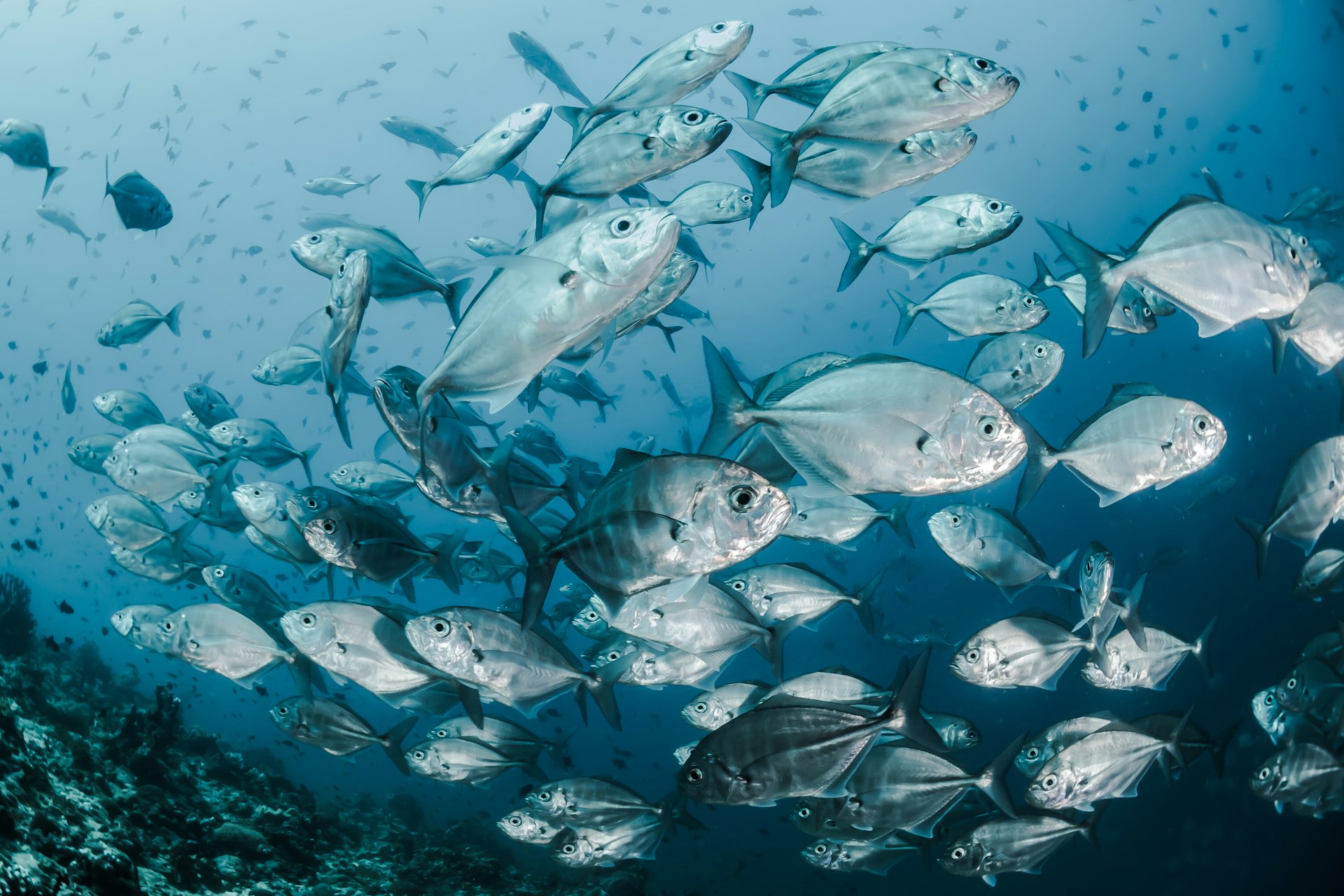
In fish farming, ozonation is used at all production stages: from water preparation to storage of finished product. Ozone disinfects water, controls fish diseases and significantly shortens the production cycle.
In recirculating aquaculture systems (RAS), ozonation removes heavy metal ions, microalgae, toxins, fungal spores, microbes and cysts from water. Water turbidity is significantly reduced, unpleasant odors disappear, and optimal conditions for fish growth are created.
Advantages of ozonation in RAS
- Water disinfection from viruses, bacteria and parasitic protozoa
- Oxidation of organic compounds and ammonia
- Removal of water turbidity and color
- Elimination of unpleasant odors (geosmin, 2-methylisoborneol)
- Coagulation of fine suspended particles for improved filtration
- Saturation of water with dissolved oxygen
- Reduction of fresh water consumption by 40-60%
Effect of ozone on water quality
Water quality is a critical factor for successful fish farming. Ozonation provides comprehensive water treatment, eliminating both biological and chemical contaminants.
| Parameter | Before treatment | After treatment | Improvement |
|---|---|---|---|
| Total bacterial count | 10⁵-10⁶ CFU/ml | 10²-10³ CFU/ml | 99-99.9% |
| Water turbidity | 15-25 NTU | 1-3 NTU | 85-95% |
| Ammonia (NH₃) | 0.5-1.5 mg/l | 0.05-0.1 mg/l | 90-95% |
| Nitrites (NO₂) | 0.3-0.8 mg/l | 0.02-0.05 mg/l | 90-95% |
| Water color | 40-60° | 5-10° | 80-90% |
| Geosmin | 50-100 ng/l | < 5 ng/l | > 95% |
Fish disease control
Ozone destroys up to 99% of pathogenic organisms: viruses, bacteria and parasitic protozoa. This reduces fish morbidity, decreases mortality and allows higher stocking density.
| Pathogen | Disease | O₃ concentration | Effectiveness |
|---|---|---|---|
| Aeromonas salmonicida | Furunculosis | 0.1-0.3 mg/l | 99.9% |
| Vibrio anguillarum | Vibriosis | 0.1-0.2 mg/l | 99.9% |
| Ichthyophthirius | Ichthyophthiriasis | 0.2-0.4 mg/l | 99% |
| Saprolegnia | Saprolegniasis | 0.15-0.3 mg/l | 99.5% |
| VHS virus | Viral hemorrhagic septicemia | 0.1-0.2 mg/l | 99.99% |
| IHN virus | Infectious hematopoietic necrosis | 0.1-0.2 mg/l | 99.99% |
Ozonation regimes for different fish species
Different fish species have different sensitivity to residual ozone. It is important to select an optimal regime for each species, ensuring disinfection effectiveness while maintaining fish safety.
| Fish species | Ozone dose | Residual O₃ | Contact time |
|---|---|---|---|
| Trout | 10-15 g/kg feed | < 0.01 mg/l | 3-5 min |
| Sturgeon | 12-18 g/kg feed | < 0.01 mg/l | 3-5 min |
| Tilapia | 8-12 g/kg feed | < 0.02 mg/l | 2-4 min |
| Carp | 10-15 g/kg feed | < 0.01 mg/l | 3-5 min |
| Catfish | 8-12 g/kg feed | < 0.02 mg/l | 2-4 min |
| Shrimp | 5-8 g/kg feed | < 0.005 mg/l | 5-10 min |
Ozonation scheme in RAS
Water intake from tank
Water with fish waste products is directed to treatment
Mechanical filtration
Removal of large suspended particles on drum or belt filter
Ozone contact chamber
Ozone injection through diffusers or injectors, contact time 3-5 minutes
Biofiltration
Final treatment for ammonia and nitrites in biological filter
Degassing
Removal of residual ozone in degasser or through activated carbon
Return to tank
Treated water returns to fish
Economic effect
Implementation of ozonation in RAS provides comprehensive economic benefits through improved growing performance and reduced operating costs.
| Indicator | Without ozone | With ozone | Benefit |
|---|---|---|---|
| Juvenile survival | 60-70% | 85-95% | +25-35% |
| Feed conversion | 1.3-1.5 | 1.1-1.2 | 15-20% savings |
| Stocking density | 30-40 kg/m³ | 50-80 kg/m³ | +60-100% |
| Growing time | 12 months | 9-10 months | 20-25% reduction |
| Treatment costs | 100% | 20-30% | 70-80% savings |
| Fresh water consumption | 100% | 40-60% | 40-60% savings |
Advantages of ozonation in fish farming
Clean water
Up to 99% water disinfection, removal of turbidity, color and unpleasant odors
Healthy fish
50-70% reduction in morbidity, lower veterinary costs
Fast growth
20-30% reduction in production cycle due to optimal conditions
High density
Ability to increase stocking density by 60-100% without risk to fish
Water savings
40-60% reduction in fresh water consumption thanks to improved treatment
Product quality
No off-flavors or odors in market fish