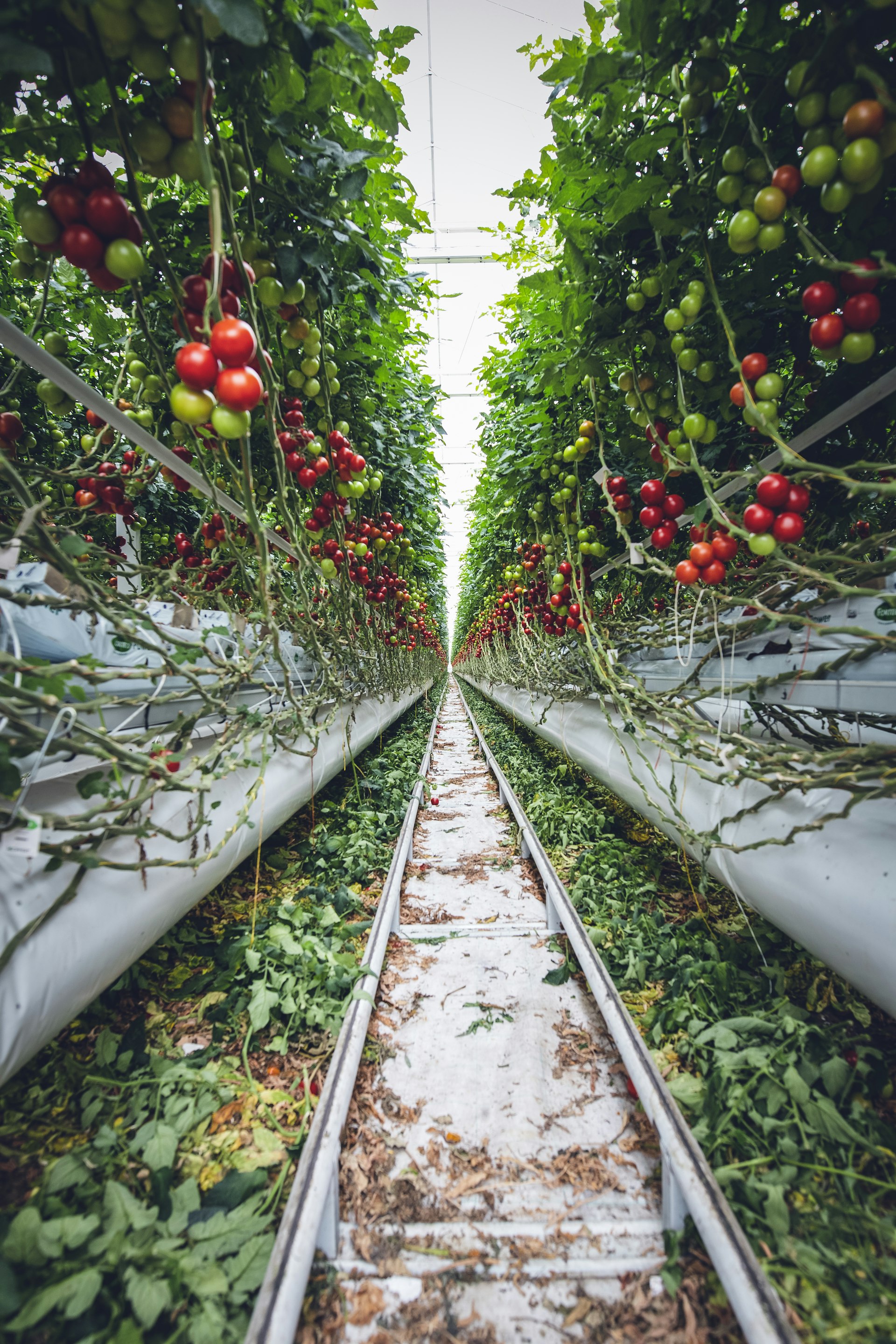
In greenhouse operations, ozone is used comprehensively: for air disinfection, plant surfaces, soil and irrigation water. This allows increasing yields and effectively controlling diseases without chemical agents.
Ozone dissolves in water 15 times better than oxygen. Irrigation with ozonated water increases yields by 13–35% through improved soil quality, increased root mass and reduced root pathogens.
Ozone applications in greenhouses
- Ozonated water irrigation — yield increase and growth stimulation
- Greenhouse soil disinfection — nematode and pathogen control
- Air ozonation — destruction of fungi, bacteria, viruses
- Pest protection — eco-friendly alternative to insecticides
- Pre-sowing seed treatment — improved germination and sprouting energy
- Greenhouse preparation for season — complete facility disinfection
Ozonated water irrigation
Irrigation with ozone-enriched water is one of the most effective technologies for increasing yields. Ozone quickly decomposes to oxygen, saturating the root zone and stimulating plant development.
| Crop | O₃ concentration | Yield increase | Additional effect |
|---|---|---|---|
| Tomatoes | 0.5–1.0 mg/l | +18–25% | Larger fruit size |
| Cucumbers | 0.5–0.8 mg/l | +15–22% | Improved taste |
| Peppers | 0.5–1.0 mg/l | +20–28% | Extended shelf life |
| Lettuce | 0.3–0.5 mg/l | +13–18% | Better appearance |
| Strawberries | 0.5–0.8 mg/l | +22–35% | Increased sugar content |
Greenhouse soil disinfection
Root-knot nematode is one of the main enemies of greenhouse crops. Chemical control methods are ineffective and contaminate the soil. Soil ozonation with concentrated ozone solution effectively suppresses nematodes and stimulates plant development.
| Pathogen | O₃ concentration | Treatment time | Effectiveness |
|---|---|---|---|
| Root-knot nematode | 3–5 mg/l | 30–60 min | 90–98% |
| Fusarium | 2–3 mg/l | 20–30 min | 95–99% |
| Verticillium | 2–3 mg/l | 20–30 min | 93–97% |
| Root rot | 1.5–2.5 mg/l | 15–25 min | 90–95% |
| Phytophthora | 2–4 mg/l | 20–40 min | 96–99% |
Soil preparation
Loosening soil to ensure ozone penetration. Removing plant residues.
Water ozonation
Preparing ozonated water with concentration of 3–5 mg/l in a special reactor.
Soil irrigation
Uniform application of ozonated water at 10–15 l/m² of greenhouse area.
Exposure
Exposure time of 30–60 minutes for complete pathogen destruction.
Planting
Seedlings can be planted 24–48 hours after treatment.
Air ozonation in greenhouses
Air ozonation in greenhouses destroys fungi, bacteria, yeast, viruses and pests. High concentrations are used to prepare the greenhouse for planting when the facility is unoccupied.
| Purpose | O₃ concentration | Time | Note |
|---|---|---|---|
| Disease prevention | 0.1–0.3 mg/m³ | 2–4 h/day | With plants present |
| Pest control | 1–2 mg/m³ | 4–6 hours | Without people and animals |
| Greenhouse disinfection | 5–10 mg/m³ | 8–12 hours | Without plants, before season |
| Mold destruction | 2–3 mg/m³ | 4–8 hours | After harvest |
Pre-sowing seed treatment
Ozone seed treatment increases germination, sprouting energy and resistance of young plants to diseases. The technology allows avoiding chemical seed dressers.
| Crop | O₃ concentration | Treatment time | Result |
|---|---|---|---|
| Tomatoes | 5–10 mg/m³ | 30–60 min | Germination +8–12% |
| Cucumbers | 5–8 mg/m³ | 20–40 min | Germination +10–15% |
| Peppers | 8–12 mg/m³ | 40–60 min | Germination +7–10% |
| Cabbage | 5–8 mg/m³ | 20–30 min | Germination +12–18% |
Benefits of ozonation in greenhouses
Environmental purity
Ozone decomposes to oxygen without forming harmful compounds — products remain environmentally clean
Chemical-free
Complete replacement or significant reduction of pesticides, fungicides and seed dressers
Yield increase
13–35% yield increase with regular ozonated water irrigation
Nematode control
90–98% effectiveness against root-knot nematode without damaging soil microflora
Product quality
Improved taste, shelf life and appearance of grown products
Economic benefit
Equipment payback in 1–2 seasons through yield increase and reduced chemical costs