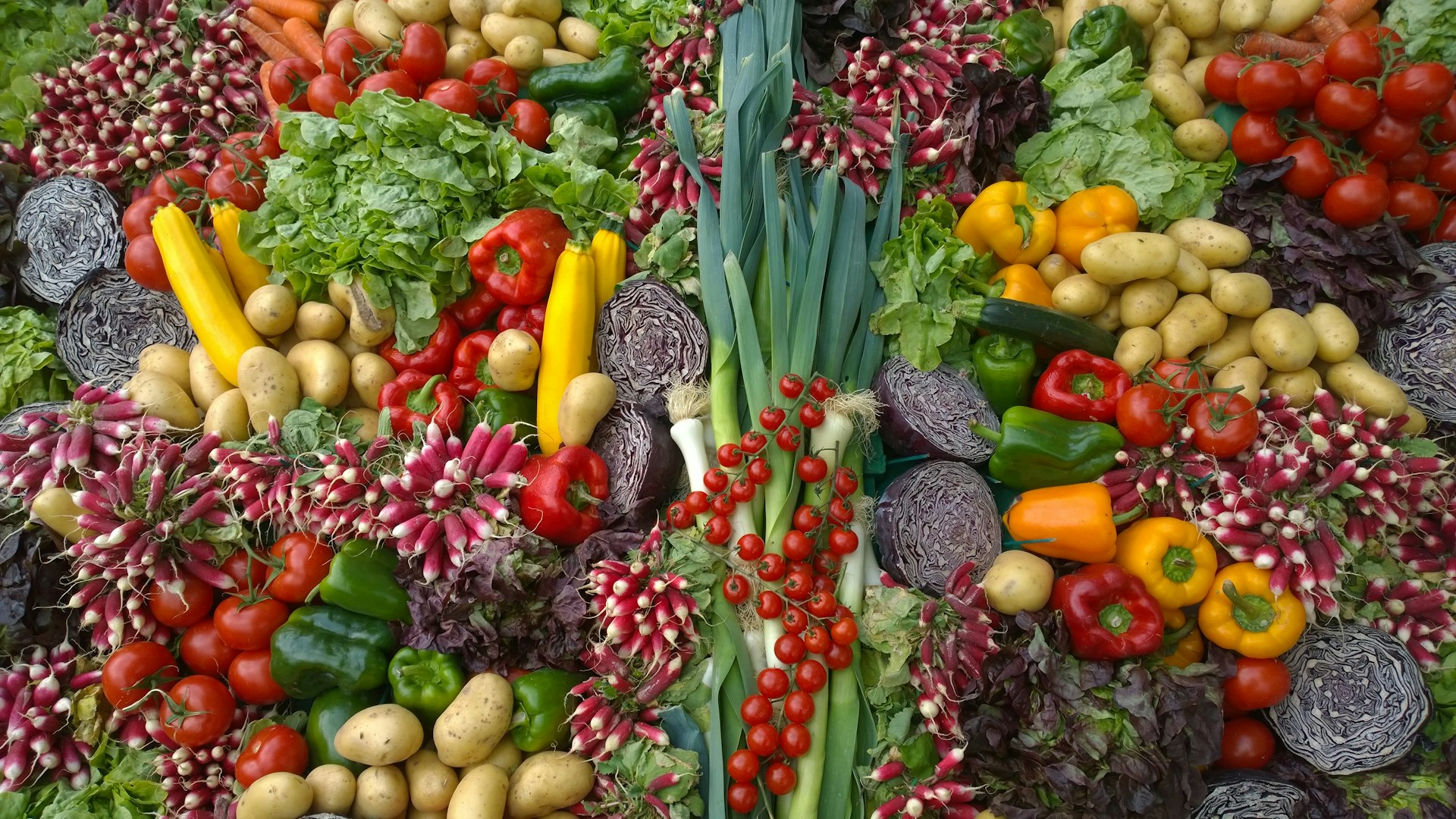
Storage losses of vegetables and fruit range from 20 to 40% of total volume. Main causes are mold development, bacterial rot, premature sprouting and wilting. Ozonation solves these problems comprehensively, extending storage life by 1.5–2 times without chemical agents.
Unlike fungicides and preservatives, ozone does not accumulate in products, decomposing to oxygen. This is especially important for organic farming and production of eco-friendly food.
Effectiveness of vegetable ozonation
| Crop | Without ozone | With ozone | Increase |
|---|---|---|---|
| Potatoes | 4–5 months | 6–7.5 months | +2.5 months |
| Carrots | 4–6 months | 7–9 months | +3 months |
| Cabbage | 4–5 months | 6–8 months | +2–3 months |
| Onions | 5–6 months | 8–9 months | +3 months |
| Beets | 5–6 months | 8–9 months | +3 months |
| Apples | 4–6 months | 7–9 months | +3 months |
Storage disease control
Main storage diseases of vegetables are caused by fungi and bacteria. Ozone is effective against all major pathogens:
- Potato late blight — 60–80% reduction in infection
- Gray mold (Botrytis) — 95% spore destruction
- Wet rot — suppression of bacterial development
- Fusarium — 70% reduction in infection
- Fruit penicillium — 90% spore destruction
- Carrot blackleg — prevention of development
Vegetable storage ozonation modes
| Crop | Concentration | Treatment time | Frequency |
|---|---|---|---|
| Potatoes | 2–5 mg/m³ | 4–6 hours | Daily |
| Carrots | 3–5 mg/m³ | 4–8 hours | Daily |
| Cabbage | 3–5 mg/m³ | 4–6 hours | Daily |
| Onions | 5–10 mg/m³ | 2–4 hours | 2–3 times per week |
| Apples | 2–3 mg/m³ | 4–6 hours | Daily |
| Citrus fruits | 3–5 mg/m³ | 4–6 hours | Daily |
It is important to consider that ozonation mode depends on temperature, humidity and product condition. At high humidity (over 95%), ozone effectiveness increases.
Additional effects of ozonation
Odor elimination
Ozone neutralizes odors of decay, mustiness, chemicals in storage
Sprouting suppression
Slowing sprouting of potatoes and onions without chemical inhibitors
Ethylene breakdown
Ethylene oxidation slows ripening and aging of fruits
Disinsection
Destruction of pest insects and their larvae in storage
Economic effect
Implementation of ozonation in vegetable storage provides significant economic benefits:
| Indicator | With ozone | Without ozone |
|---|---|---|