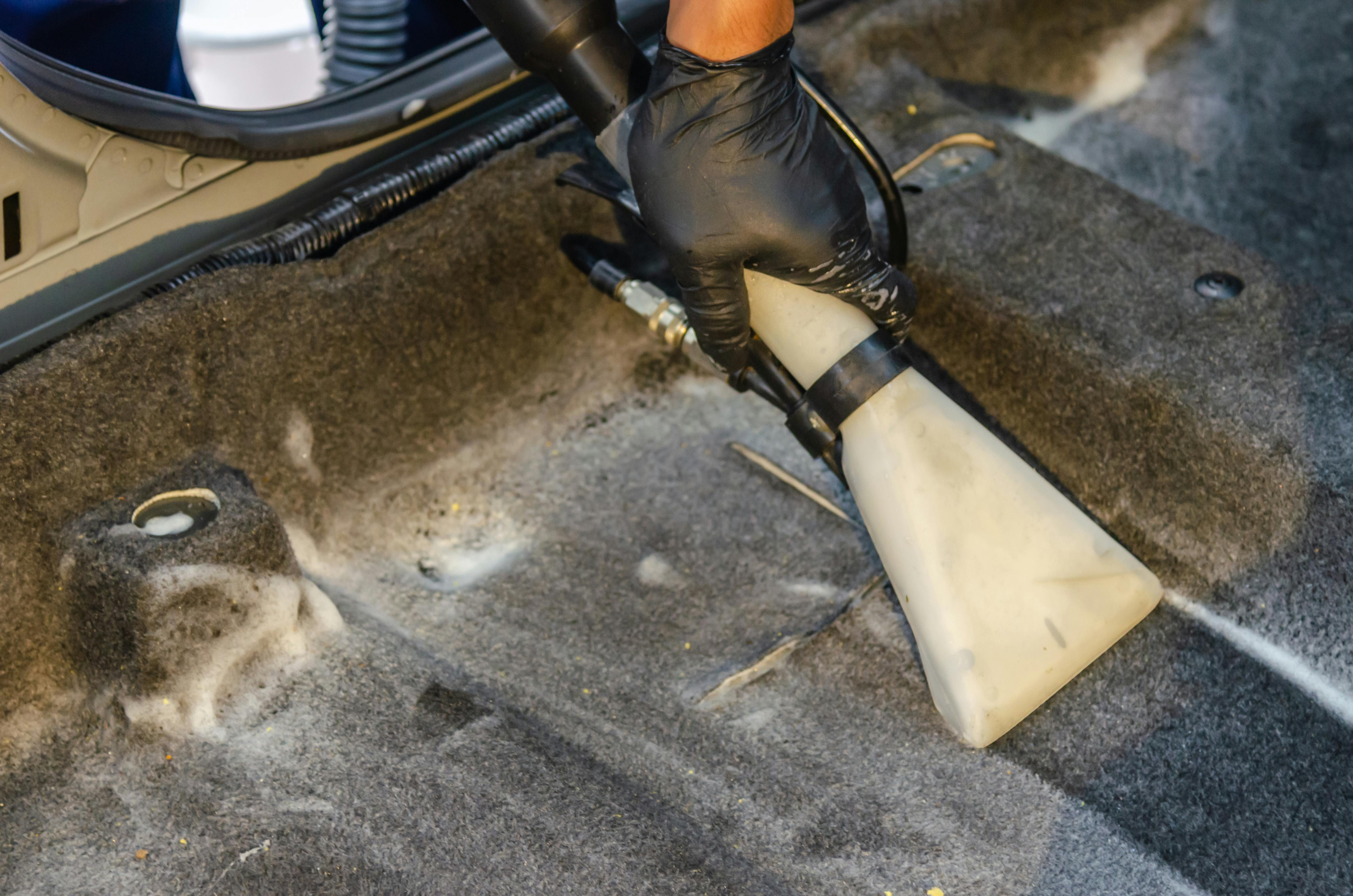
A car interior is an enclosed space where odors quickly accumulate: tobacco smoke, sweat, food, drinks, pets. All these odors are absorbed into the interior's textile elements: seats, carpets, headliner, as well as the ventilation and air conditioning system.
Dry cleaning removes dirt and stains but doesn't always handle ingrained odors. Air fresheners and deodorizers only mask the problem. Ozonation is the only method that completely destroys odor molecules, including those in AC ducts.
What problems ozonation solves
- Tobacco smoke odor — ingrained in upholstery, headliner, plastic
- Previous owner smell — when buying a used car
- Food and drink odors — spilled coffee, fast food, spoiled products
- Pet odors — fur, saliva, marks
- Damp and mold odor — after flooding or long storage
- Bacteria in AC — cause of unpleasant odor when turned on
Car ozonation process
Interior preparation
Perform standard cleaning: vacuum, wipe plastic surfaces. Remove trash and personal items. Take out floor mats for separate treatment.
Ozone generator placement
Place the ozone generator in the interior on the front seat or floor. Close all windows and doors. Leave a small gap for the power cord if using an external generator.
Ventilation system treatment
Turn on ignition, set air recirculation mode, turn fan to maximum. This ensures ozone circulation through the AC system.
Ozonation
Run the ozone generator for 20-40 minutes at 20-40 mg/m³ concentration. For strong odors — up to 60 minutes. Leave the car during treatment.
Ventilation
Open all doors and windows. Ventilate for 15-30 minutes. Turn on AC to fresh air intake mode. The car is ready for use.
Treatment modes for different tasks
| Type of contamination | Concentration | Time | Features |
|---|---|---|---|
| Light odors | 10-20 mg/m³ | 20 min | Preventive treatment |
| Tobacco smoke (light) | 20-30 mg/m³ | 30 min | After smoking passenger |
| Tobacco smoke (strong) | 30-40 mg/m³ | 45-60 min | Smoker's car |
| Pet odors | 30-40 mg/m³ | 40-60 min | With recirculation on |
| After flooding | 40-60 mg/m³ | 60 min | After interior drying |
| AC disinfection | 20-30 mg/m³ | 30 min | Recirculation only |
Ozonation as a car wash and detailing service
For car washes and detailing centers, ozonation is a high-margin additional service. Equipment is compact, requires no consumables, pays for itself in 1-2 months with active customer promotion.
High profitability
Treatment cost is electricity. Average service price: $20-40
Quick execution
30-60 minutes per treatment. Can be done in parallel with dry cleaning or polishing
Simple operations
Place generator, turn on, leave. Doesn't require qualified staff
Complement to dry cleaning
Ozonation after dry cleaning — comprehensive service with higher price
Ozonation for car-sharing and taxis
Taxi and car-sharing fleets are ideal clients for regular ozonation:
- High turnover — many different passengers every day
- Odor accumulation — food, drinks, perfume, tobacco from passengers
- Sanitary requirements — especially relevant after the pandemic
- Reputation risks — odor complaints lower ratings
- Regularity — possibility of service contracts
| Fleet type | Recommended frequency | Purpose |
|---|---|---|
| Car-sharing | Once a week | Prevent odor accumulation |
| Economy taxi | Once every 2 weeks | Maintain interior freshness |
| Business/comfort taxi | Once a week | High quality standard |
| Rental cars | After each customer | Preparation for next rental |
| Corporate transport | Once a month | Preventive treatment |
Comparison with alternative methods
Ozonation vs chemical air fresheners
| Parameter | Ozonation | Fresheners/neutralizers |
|---|---|---|
| Principle of action | Destruction of odor molecules | Masking with another odor |
| Ventilation system | Full treatment | Not treated |
| Effect duration | Permanent (until new contamination) | Temporary (hours/days) |
| Disinfection | Yes (kills bacteria) | No |
| Safety | Decays to O₂ | Chemical compounds |
| Presence required | No (automatic) | Requires application |
Working with different interior types
| Interior type | Features | Recommendations |
|---|---|---|
| Fabric | Absorbs odors well | Increase treatment time by 20% |
| Leather | Less absorption, easier to treat | Standard mode |
| Synthetic leather | Similar to natural leather | Standard mode |
| Alcantara | Microfiber, absorbs well | Same as fabric interior |
| Combined | Different materials | Focus on fabric elements |