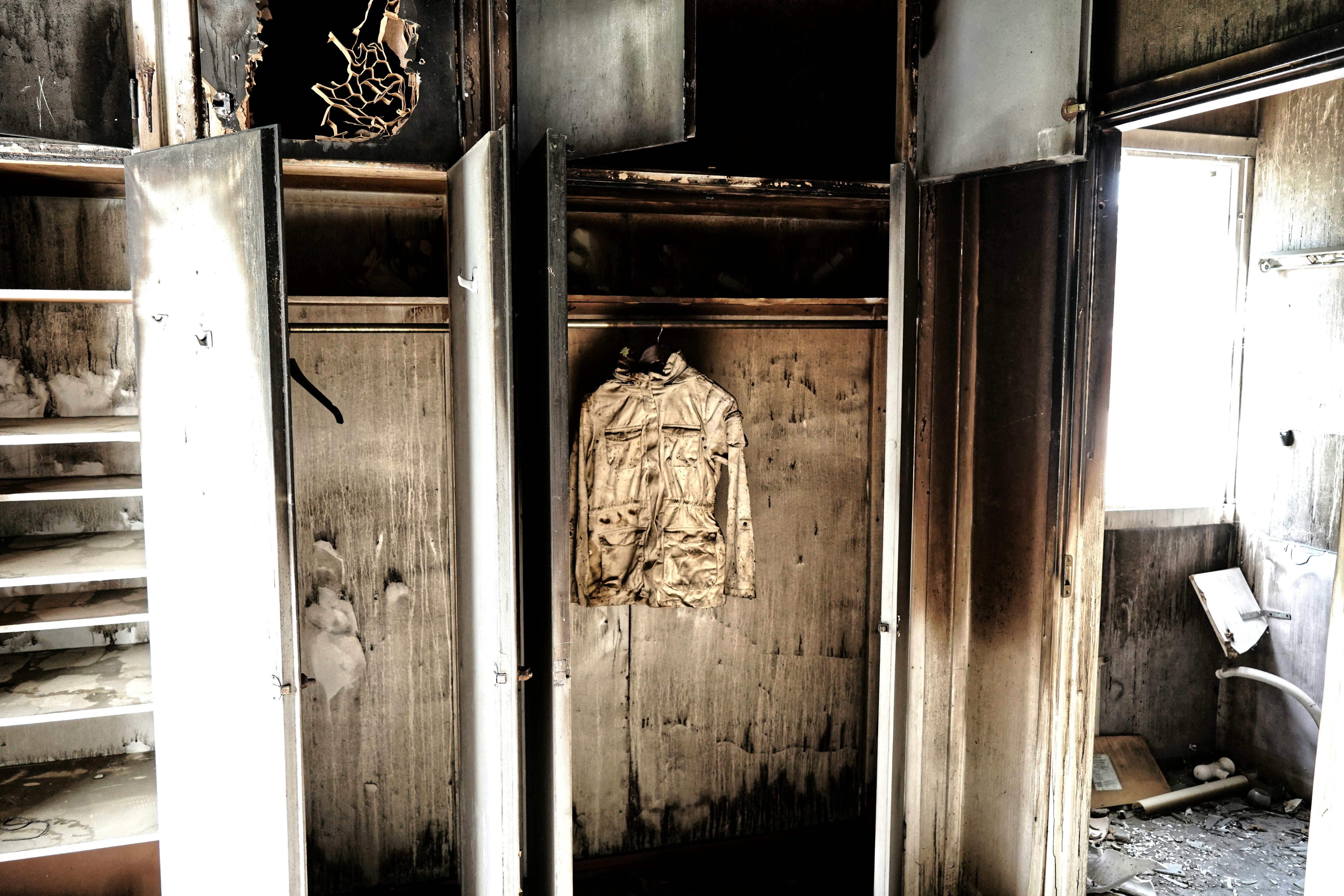
Fire smoke odor is among the most persistent and difficult to remove. Combustion products penetrate deep into building materials: plaster, concrete, brick, wood. Tiny soot particles are absorbed into textiles, upholstery, carpets, wallpaper. Traditional cleaning and ventilation don't help — the odor keeps coming back.
Many property owners after a fire are forced to do a full renovation with replacement of finishes. However, ozonation allows solving the problem faster and cheaper — without demolishing walls and replacing furniture.
How ozone eliminates fire smoke odor
Ozone is a gas that penetrates everywhere smoke and soot particles have reached. It oxidizes organic compounds at the molecular level, breaking chemical bonds in combustion product molecules. As a result, safe compounds are formed — water and carbon dioxide.
- Penetrates micropores of concrete, plaster, brick
- Treats wooden structures from inside
- Reaches hidden cavities behind wall cladding
- Passes through textiles and furniture upholstery
- Cleans ventilation systems and ducts
- Treats books, documents, clothing
Post-fire room treatment stages
Preliminary cleaning
Remove visible soot and smoke residue from all surfaces. Wipe walls, ceilings, floors. Vacuum upholstery and carpets. Remove severely damaged items.
Room sealing
Close all windows and doors. Seal ventilation openings. Seal gaps. This is necessary to maintain high ozone concentration.
First ozonation cycle
Install ozone generator, leave the room. Treatment at 40-80 mg/m³ concentration for 8-24 hours. Ozone must completely fill the room volume.
Ventilation and assessment
Ventilate the room for 2-4 hours until ozone odor completely disappears. Assess the result. If necessary, perform additional wet cleaning.
Repeat cycles (if needed)
For heavy smoke damage, 2-3 treatment cycles with ventilation breaks are required. Each cycle further reduces odor concentration.
Treatment modes depending on damage level
| Damage level | Concentration | Cycle time | Number of cycles |
|---|---|---|---|
| Light smoke | 20-40 mg/m³ | 4-8 hours | 1 |
| Moderate smoke | 40-60 mg/m³ | 12-24 hours | 1-2 |
| Heavy smoke | 60-80 mg/m³ | 24-48 hours | 2-3 |
| Very heavy | 80+ mg/m³ | 48-72 hours | 3+ |
Comparison of fire smoke odor removal methods
Ozonation vs other methods
| Criterion | Ozonation | Major renovation |
|---|---|---|
| Cost | Low | Very high |
| Completion time | 1-3 days | 2-4 weeks |
| Effectiveness | 95-100% | 100% |
| Preservation of finishes | Yes | No (replacement) |
| Preservation of furniture | Yes | Depends on damage |
| Need for evacuation | During treatment | For entire repair period |
What can be treated with ozone
Building structures
Walls, ceilings, floors, wooden beams. Ozone penetrates to a depth of several centimeters
Upholstered furniture
Sofas, armchairs, mattresses, pillows. Ozone treats both filling and upholstery simultaneously
Carpets and textiles
Carpet coverings, curtains, clothing in closets. Can be treated directly in the room
Books and documents
Paper media absorb fire smoke odor. Ozonation allows preserving archives
When ozonation won't help
Ozonation is not a universal solution. There are cases when additional treatment or repair is required:
- Charred surfaces — require mechanical cleaning or replacement
- Water-soaked materials after firefighting — drying first
- Melted plastic — odor source not eliminated by ozone
- Deeply sooted drywall — may require replacement
- Ventilation systems with accumulated soot — require mechanical cleaning
Economic effect
Ozonation allows significant savings on post-fire restoration:
| Expense item | With ozonation | Without ozonation |
|---|---|---|
| Finish removal | — | $500 |
| New finishes | — | $2,000 |
| Furniture cleaning | $150 | $150 |
| Ozonation | $200 | — |
| New furniture (replacement) | — | $1,500 |
| TOTAL | $350 | $4,150 |