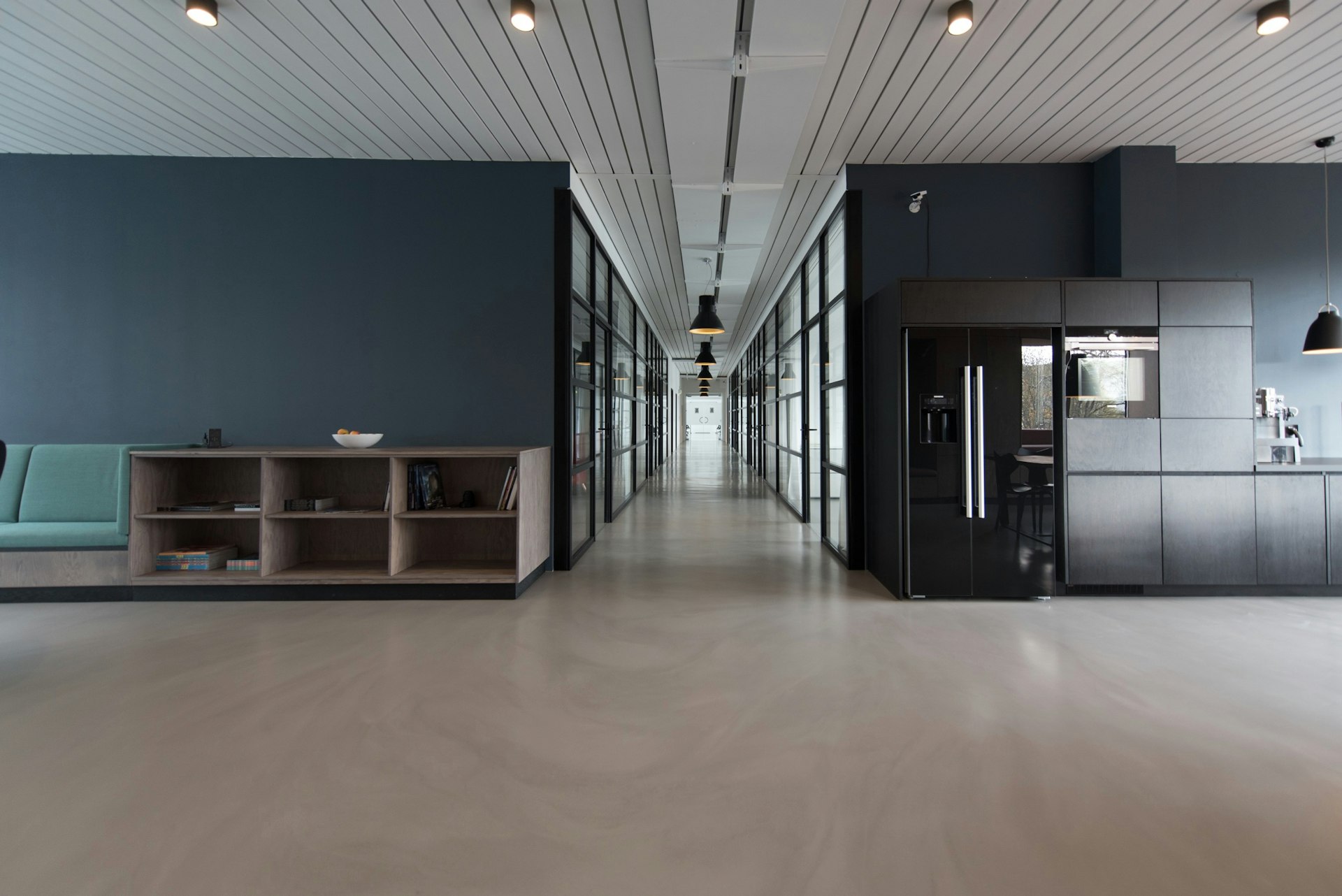
The office is the face of the company. Polluted air with unpleasant odors harms staff, reduces productivity and loyalty, and damages the company's image with clients and partners.
Scientists have found that in most buildings, concentrations of harmful and toxic chemicals in the air are 2–5 times higher than outdoors. In some offices, indoor air pollution levels for certain toxins are up to 70 times higher than outside.
The problem of air quality in offices
Air loses its 'freshness' after passing through air conditioners and heating systems. As a result, ozone and ion levels drop by 90%. The lack of these natural air components has led to complaints of frequent headaches, weakness, and poor well-being — 'sick building syndrome'.
- Benzene — from paints, carpets, curtains, and furniture upholstery
- Ammonia — from tobacco smoke and cleaning products
- Formaldehyde — from plywood, furniture, particleboard, office partitions
- Trichloroethylene — from paint, glue, furniture, and wallpaper
- Chloroform — from paints, carpets, and curtains
Effectiveness of ozonation
Studies have shown that adding ozone to air at 15 parts per billion (0.03 mg/m³) produces an effect equivalent to a two-hour walk in fresh air. Staff showed strengthened immune systems, increased blood oxygen levels, and improved blood pressure.
| Indicator | Before ozonation | After ozonation |
|---|---|---|
| Headache frequency | Frequent | Rare |
| Work capacity | 70% | 100% |
| Attention concentration | Reduced | Normal |
| ARI incidence | 15-20% per season | 8-10% per season |
| Atmosphere satisfaction | 45% | 89% |
What ozone disinfects in the office
Ozone disinfects all surfaces touched by staff and visitors. The gas penetrates crevices and hard-to-reach areas behind equipment and into ventilation systems.
- Work desks and countertops
- Armrests of chairs and seats
- Keyboards, mice, phones
- Door handles and handrails
- Office equipment and coffee machines
- Meeting rooms and coworking areas
- Ventilation and air conditioning systems
Office treatment mode
Ozonation of offices and coworking spaces is conducted at night. Equipment runs automatically on a timer. By the time staff arrive, ozone has dissipated, leaving a light fresh smell.
Room preparation
Close all windows and doors. Turn off supply ventilation. Ensure no one is in the room.
Starting the ozonator
Turn on the ozonator for 40–120 minutes depending on room volume. Capacity: 1 g/h per 25 m³.
Exposure
Ozone spreads throughout the room, penetrating all crevices and far corners. Concentration reaches the required level.
Ventilation
2–3 hours after treatment ends, ozone decomposes to safe levels. Active ventilation is not required.
| Room type | Volume | Capacity | Treatment time |
|---|---|---|---|
| Office | up to 50 m³ | 2-3 g/h | 60 min |
| Open space | 100-300 m³ | 5-10 g/h | 90 min |
| Meeting room | 30-50 m³ | 2 g/h | 40 min |
| Coworking | 200-500 m³ | 10-20 g/h | 120 min |
Comparison of air cleaning methods
| Parameter | Ozonation | Chemical cleaning |
|---|---|---|
| Air disinfection | Yes | No |
| Hard-to-reach areas | Yes (gas penetrates everywhere) | No |
| Toxin neutralization | Yes | No |
| Odor elimination | Complete | Masking |
| Chemical residues | No (decomposes to O₂) | Yes |
| Recovery time | 2-3 hours | Immediate |
Benefits for employers
Reduced sick leave
30–40% reduction in staff illness during flu season
Increased productivity
Clean air improves concentration and work capacity
Company image
Caring for employee health is part of corporate culture
Automation
Timer-based operation without staff involvement at night
Toilet odor elimination
Toilet odor is one of the most common problems in office buildings. Causes can vary: leaky pipe connections, ventilation 'backflow', uric acid stone formation.
Safety requirements
- Treatment is conducted in the absence of people
- Ozone MAC in work zone — 0.1 mg/m³
- Ventilation is not required after night treatment
- Staff opening the room after treatment use respirators
- Equipment runs automatically on a timer