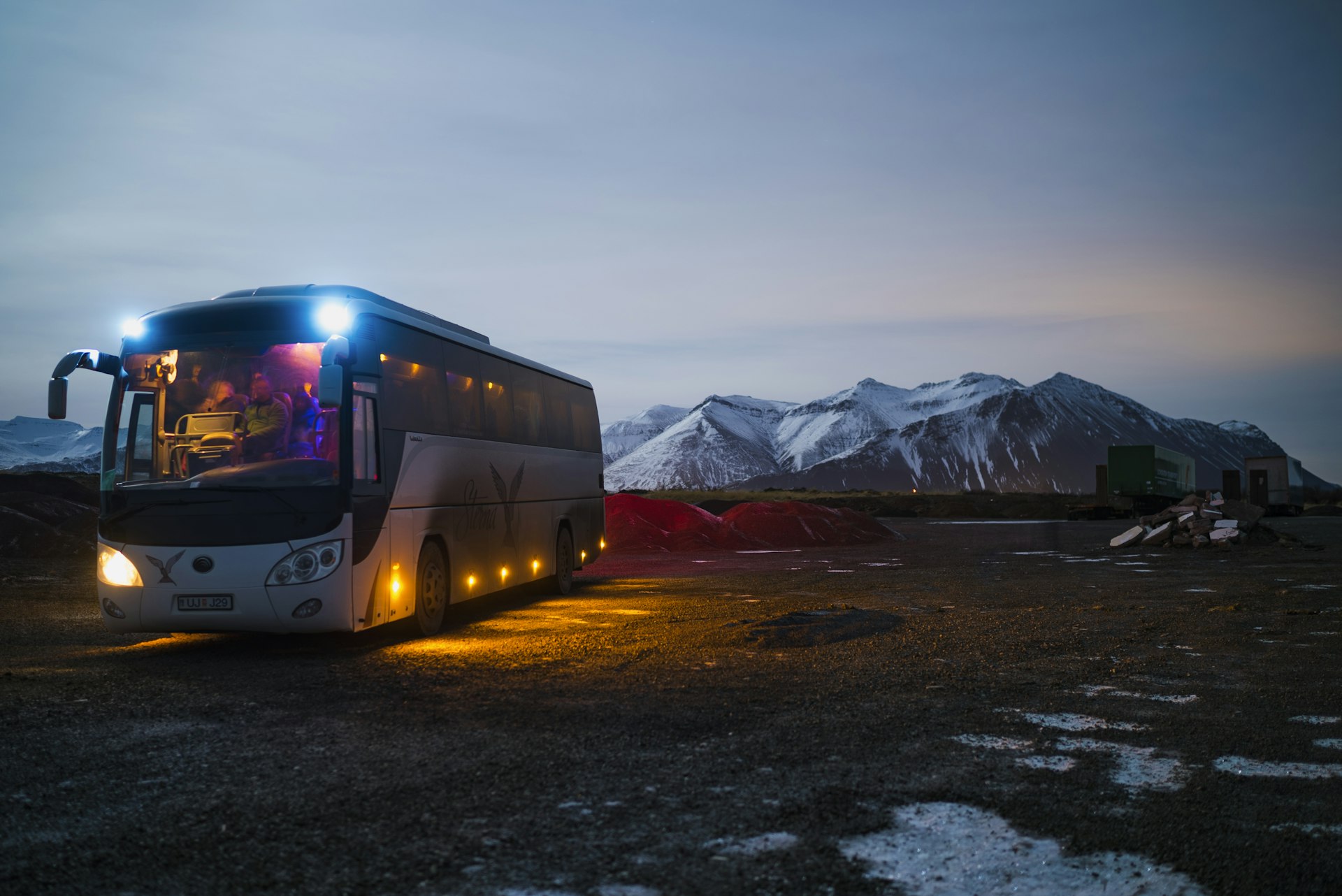
Public transport is a high-risk environment for infection transmission. Thousands of passengers touch the same handrails, seats and buttons daily. Ozonation allows quick and effective disinfection of bus, tram and trolleybus interiors between runs or at night.
Unlike manual chemical disinfection, ozone penetrates all crevices and hard-to-reach areas, ensuring complete interior treatment. There are no chemical residues that could cause allergies to passengers.
What ozone disinfects in transport
- Handrails and railings — main passenger contact points
- Seats and backrests — accumulate bacteria and odors
- Windows and walls — dust and aerosol particles settle
- Floor of the cabin — dirt and microorganisms accumulate
- Ventilation system — spreads infections throughout the cabin
- Driver's cabin — protects personnel from diseases
Transport treatment mode
Ozonator installation
Place the ozonator in the passenger cabin at maximum height from the floor. Close all windows and doors.
Start treatment
Turn on the ozonator for 20-40 minutes depending on cabin volume. Leave the vehicle.
Ozone exposure
Ozone spreads throughout the cabin, penetrating all crevices and hard-to-reach areas. Destroys viruses, bacteria, mold.
Ventilation
Open doors and windows, ventilate cabin for 20 minutes. Use vehicle ventilation system to accelerate.
| Transport type | Interior volume | Capacity | Time |
|---|---|---|---|
| Minibus | 15-25 m³ | 5-10 g/h | 20 min |
| City bus | 40-60 m³ | 20-30 g/h | 30 min |
| Articulated bus | 80-100 m³ | 30-50 g/h | 40 min |
| Tram/trolleybus | 50-80 m³ | 20-40 g/h | 35 min |
Treatment organization options
Public transport disinfection can be organized in several ways depending on fleet size and operating schedule.
Treatment at depot
Centralized treatment of entire fleet at night with powerful mobile ozonators
Between runs
Express treatment at terminal stops with compact ozonators
Stationary installation
Wall-mounted ozonator in cabin, operating from vehicle power on timer
Mobile team
Portable ozonators for treating transport on the route
Power supply from vehicle electrical system
Ozonators can operate from vehicle electrical system, allowing treatment without external power connection.
| Power type | Application | Advantages |
|---|---|---|
| 12V DC | Minibus, microbus | Standard vehicle power |
| 24V DC | Buses, trolleybuses | Increased power |
| 220V AC | Depots, parks | Maximum capacity |
| Battery | Mobile teams | Autonomy |
Effectiveness against pathogens
| Pathogen | Time at 20 mg/m³ | Effectiveness |
|---|---|---|
| Coronaviruses (COVID-19) | 10-15 min | 99.9% |
| Influenza viruses | 5-10 min | 99.9% |
| Staphylococcus aureus | 10-15 min | 99.9% |
| E. coli | 5-10 min | 99.9% |
| Mold and fungi | 15-20 min | 99% |
| Odors (organic) | 20-30 min | 100% |
Disinfection method comparison
Ozonation vs chemical treatment
| Criterion | Ozonation | Chemical treatment |
|---|---|---|
| Treatment time | 20-40 min + ventilation | 15-30 min |
| Surface coverage | 100% (including hidden) | 60-70% (accessible only) |
| Chemical residues | None | Yes (can cause allergy) |
| Consumables | None | Yes (disinfectants) |
| Odor elimination | Complete | Partial (masking) |
| Staff involvement | Minimal | Constant |
Benefits for transport companies
Passenger protection
Reduced risk of infection spread in public transport
Driver protection
Fewer sick days, stable route operation
No chemicals
No costs for disinfectants and storage
Automation
Timer operation without constant monitoring
Safety requirements
- Treatment only when cabin is empty
- Driver and staff leave vehicle during treatment
- After treatment — ventilate 20 minutes or operate ventilation system
- Staff use respirator when entering immediately after treatment
- Ozone MPC — 0.1 mg/m³ (smells like 'after thunderstorm')