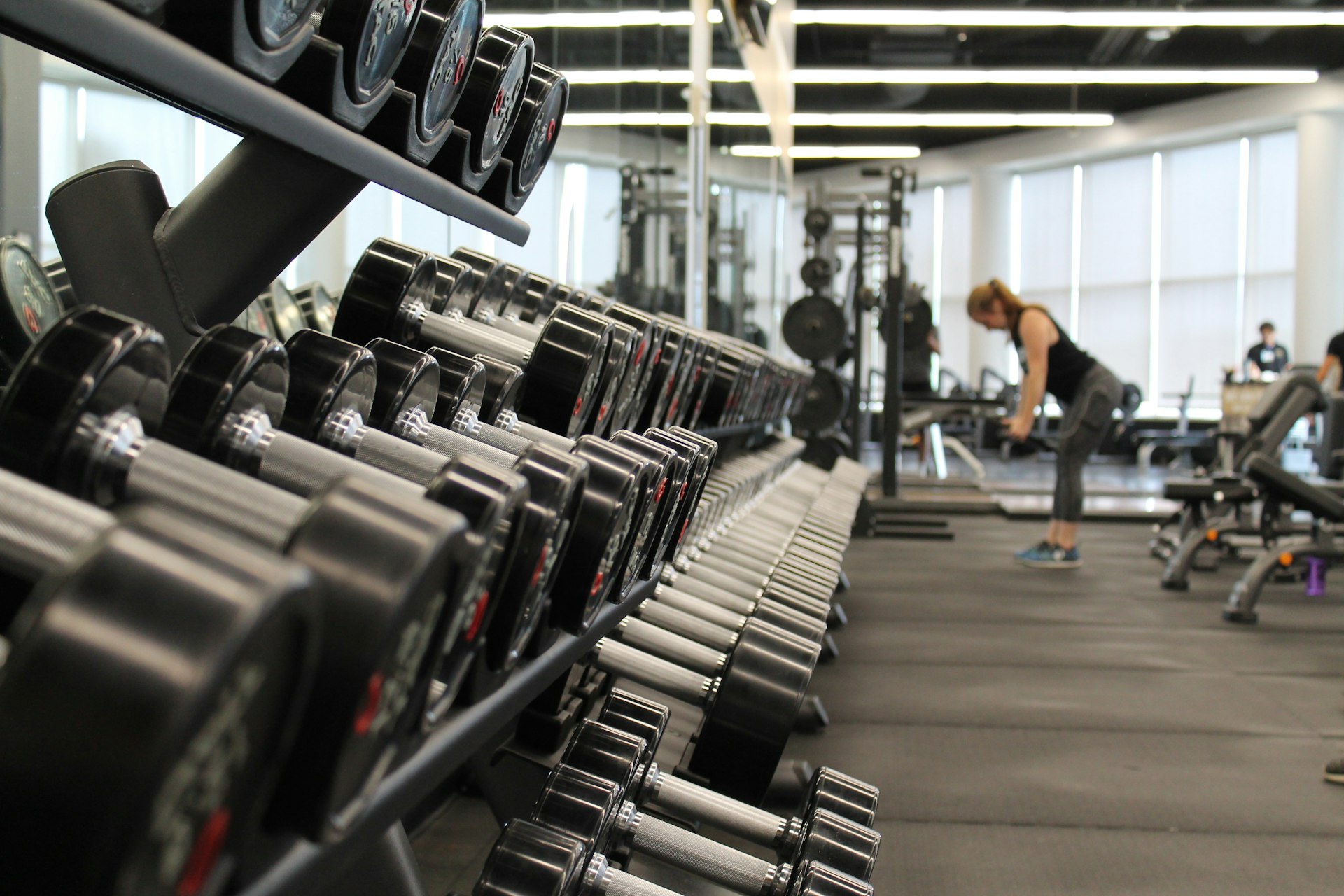
Gyms, fitness centers and locker rooms are high-risk for infection spread and have specific odors. Ozonation addresses both: it disinfects equipment and completely removes sweat odor, rather than masking it.
Ozone destroys bacteria, viruses, mold, fungi and parasitic protozoa on equipment, stands, benches and mats. The gas penetrates material pores for deep disinfection of textiles and soft surfaces.
What ozone disinfects
- Exercise machines and sports equipment
- Mats, yoga and fitness mats
- Locker room benches
- Lockers and shelves
- Shower cabins and restrooms
- Textiles: towels, robes (in lockers)
- Ventilation and air conditioning systems
- Stands and spectator areas
Odor problem in gyms
Sweat odor in gyms is the result of bacterial activity on human skin. Regular cleaning and air fresheners only mask the problem. Ozone breaks down odor molecules and destroys the bacteria that produce them.
| Odor type | Source | Elimination time |
|---|---|---|
| Sweat | Skin bacteria | 30-60 min |
| Dampness | Mold and fungi | 60-90 min |
| Stale air | Insufficient ventilation | 40-60 min |
| Rubber | Flooring and mats | 90-120 min |
Sports facility treatment mode
Sports facilities are treated at night when closed to visitors. For large halls and arenas, powerful mobile ozone generators of 60–120 g/h are used.
Room preparation
Close all windows and doors. Turn off supply ventilation. Ensure no one is in the hall.
Ozone generator placement
Wall-mounted generator — at least 3 m high. Mobile — at maximum height, e.g., on a referee's platform.
Ozonation
Run the generator for 2–3 hours. Capacity: 1 g/h per 25 m³ of room volume.
Ozone decay
After the generator stops, concentration drops to safe levels in 2–3 hours. A light fresh smell remains.
Equipment calculation
| Facility type | Volume | Capacity | Time |
|---|---|---|---|
| Fitness hall | 200-500 m³ | 10-20 g/h | 120 min |
| Locker room | 50-100 m³ | 3-5 g/h | 90 min |
| Gym | 300-600 m³ | 15-25 g/h | 150 min |
| Sports arena | 2000-5000 m³ | 80-200 g/h | 180 min |
| Pool (air) | 500-1500 m³ | 20-60 g/h | 120 min |
Special attention zones
Locker rooms
Benches, lockers, floor — main points of fungal infection transmission
Showers
Humid environment promotes mold and fungi growth
Cardio zone
Intense sweating, many contact surfaces
Group class hall
Mats, shared equipment — infection transmission risk
Effectiveness against pathogens
| Pathogen | Inactivation time | Efficiency |
|---|---|---|
| Trichophyton (athlete's foot) | 20-30 min | 99.9% |
| Candida albicans | 15-20 min | 99.9% |
| Staphylococcus aureus | 10-15 min | 99.99% |
| Influenza viruses | 5-10 min | 99.99% |
| Mold (spores) | 30-40 min | 99% |
| E. coli | 5-10 min | 99.99% |
Comparison with traditional cleaning
Ozonation vs chemical disinfection
| Criterion | Ozonation | Chemical treatment |
|---|---|---|
| Sweat odor elimination | Complete (molecule breakdown) | Masking |
| Mat and textile treatment | Deep (gas in pores) | Surface only |
| Ventilation systems | Yes | No |
| Chemical residues | No | Yes (allergy risk) |
| Recovery time | 2-3 hours | Immediate |
| Consumables | No | Yes |
Benefits for owners
Reputation
Clean air and no odors — competitive advantage
Client health
Reduced risk of fungal and viral infections
Savings
No costs for chemicals and air fresheners
Automation
Timer operation without staff involvement
Safety requirements
- Treatment only when unoccupied (nighttime)
- Ozone MPC in work zone — 0.1 mg/m³
- Staff should not enter during treatment
- If entry is necessary — use respirator with carbon filter
- After nighttime treatment, ventilation is not required
- By opening time, ozone will fully decompose