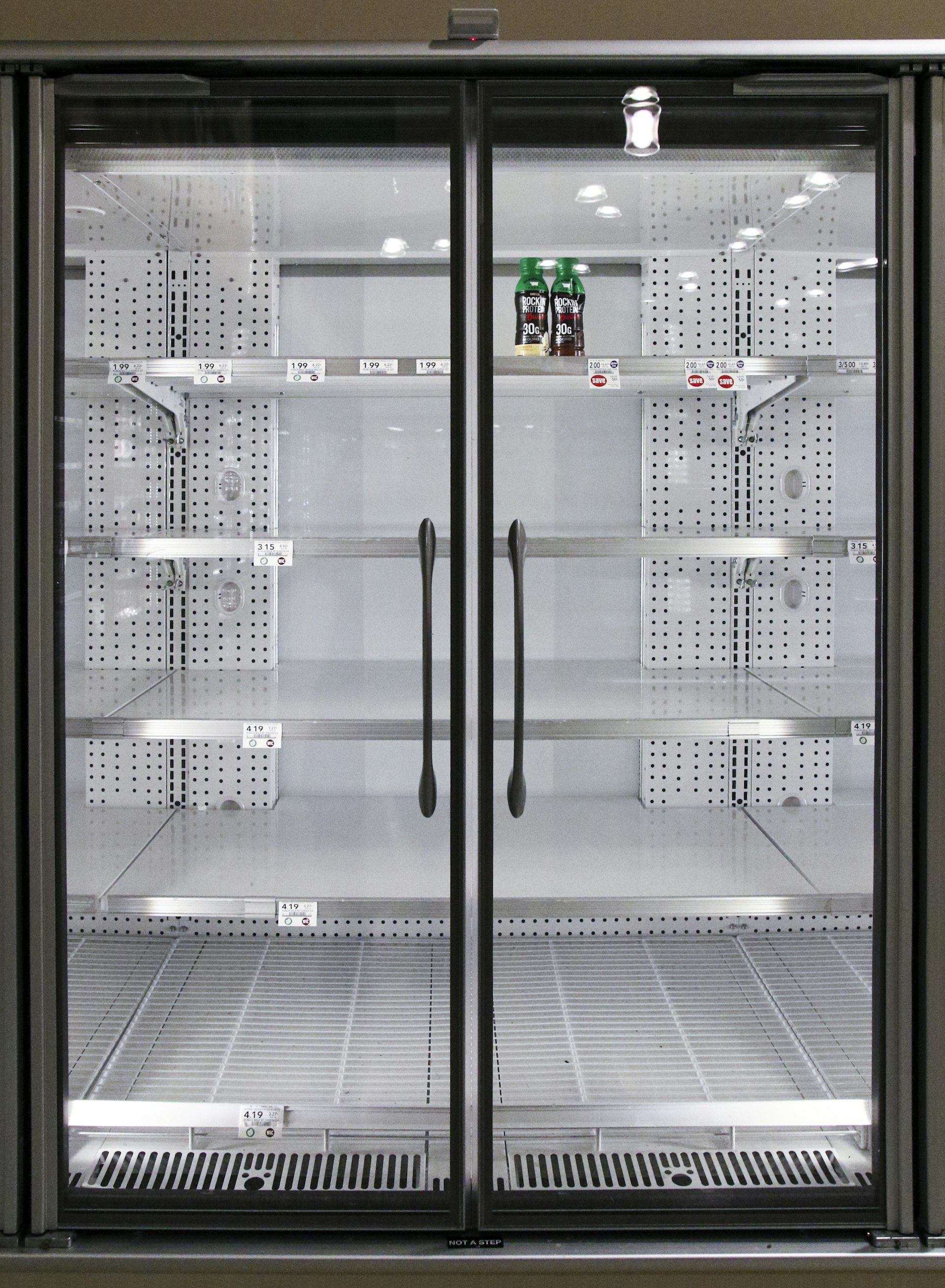
Disinfection and deodorization of cold storage facilities is one of the most important sanitary and hygienic measures aimed at preventing spoilage and quality degradation of stored food products. Ozonation has significant advantages over "wet" disinfection methods.
Practice has shown that ozonation of cold storage chambers and warehouses allows extending product shelf life, removing unpleasant odors and preventing mold colony formation — all without warming the chamber or unloading products.
Advantages of cold storage ozonation
- Ability to disinfect chambers loaded with food products
- Treatment without warming the chamber — effectiveness increases at low temperatures
- Reduction of chamber downtime by 5 times compared to "wet" disinfection
- Indispensable for combating musty odors in cold storage
- Suppression of bacterial flora on walls, grates, hooks, pallets
- Prevention of mold on storage walls, boxes and packaging
- Energy savings — no need for repeated cooling
- Minimal labor costs — automated process
Ozonation of empty chambers
Empty chambers are cleaned of snow, ice, product residues and visible mold colonies before ozonation. The snow "coat" must be removed. Chamber doors are tightly closed, and connecting air channels are blocked with dampers.
| Initial concentration | Final concentration | Time (up to 400 m³) | Time (over 400 m³) |
|---|---|---|---|
| 40 mg/m³ | 20 mg/m³ | 0.4 hours | 0.2 hours |
| 20 mg/m³ | 10 mg/m³ | 0.8 hours | 0.4 hours |
| 10 mg/m³ | 5 mg/m³ | 1.2 hours | 0.6 hours |
| 5 mg/m³ | 2.5 mg/m³ | 1.6 hours | 0.8 hours |
| 2.5 mg/m³ | 0.1 mg/m³ | 3.6 hours | 1.8 hours |
Ozonation of loaded chambers
Based on foreign practice data and results of ozonation application at individual cold storage facilities, the following ozone concentrations are recommended for chambers loaded with products:
| Product | Temperature | Concentration | Time | Frequency |
|---|---|---|---|---|
| Chilled meat | -1...-4°C | 8-10 mg/m³ | 4-5 h | Every other day |
| Frozen meat | -18°C | 10 mg/m³ | 3 h | Daily |
| Poultry (chilled) | -1...-4°C | 8-10 mg/m³ | 2-3 h | Daily |
| Poultry (frozen) | -18°C | 8-12 mg/m³ | 3 h | Daily |
| Sausage products | +12°C | 3-10 mg/m³ | 3-4 h | Every 2-3 days |
| Cheeses | -4...+4°C | 3-4 mg/m³ | 5-7 h | Every 2-3 days |
| Eggs | -1.5...+0.5°C | 3-6 mg/m³ | 3-5 h | As odor appears |
| Product | Temperature | Concentration | Time | Frequency |
|---|---|---|---|---|
| Potatoes | +2...+3°C | 10-15 mg/m³ | 6 h | Every 10 days |
| Carrots | 0...-1°C | 15-30 mg/m³ | 6 h | Every 8-10 days |
| Apples | 0...-2°C | 1-3 mg/m³ | 0.5-2 h | Daily |
| Onions | -1...-3°C | 25-30 mg/m³ | 5-6 h | Every 3 days |
| Grapes | 0...-2°C | 4-6 mg/m³ | 3 h | Daily |
Comparison of cold storage chamber disinfection methods
| Parameter | Ozonation | "Wet" disinfection |
|---|---|---|
| Product unloading | Not required | Required |
| Chamber warming | Not required | Required |
| Downtime | 24 hours | 5-7 days |
| Energy consumption | Minimal | Significant |
| Labor costs | Minimal | High |
| Chemical residues | None | Rinsing required |
| Hard-to-reach areas treatment | Complete | Difficult |
Cold storage deodorization
Ozonation is indispensable for combating musty odors that form in cold storage and freezer chambers. During deodorization, chambers are held after ozonator shutdown for 24 hours without ventilation — ozone fully decays to oxygen.
Ozone oxidizes and destroys organic compounds that cause unpleasant odors. This allows using one chamber to store different types of products alternately without risk of odor transfer.
Ozonation process organization
In the ozonated chamber, the ozonator is installed in the middle of the chamber on a table approximately 1.2 m high. With two or three ozonators, they are placed at different points in the chamber for even ozone distribution. Air cooler fans are turned off.
Advantages for cold storage warehouses
Treatment of loaded chambers
Disinfection without unloading products and stopping warehouse operations
Operation at subzero temperatures
Ozonation effectiveness increases at low temperatures
Odor elimination
Complete chamber deodorization without chemical agents
Resource savings
5× reduction in downtime, energy and labor savings