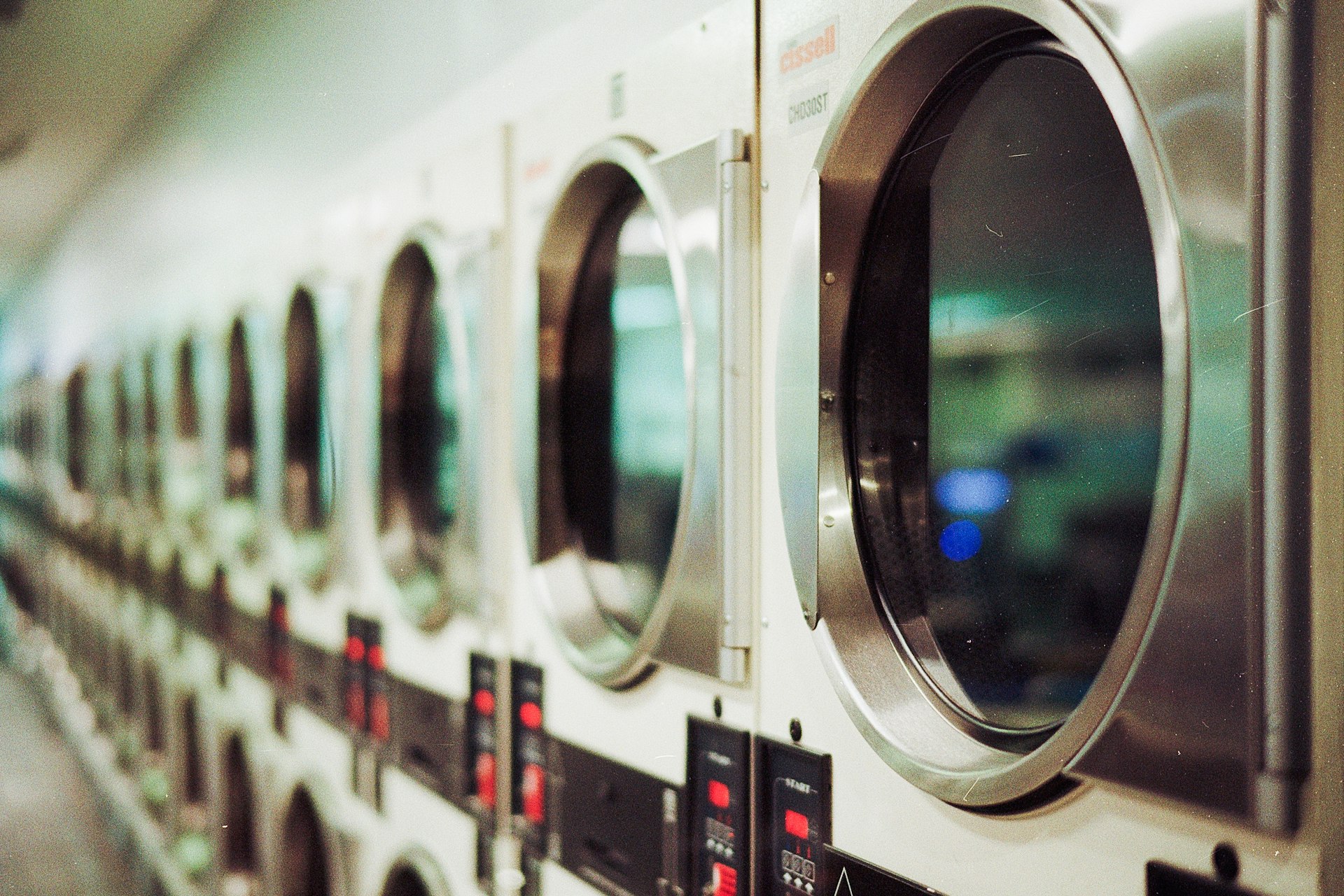
Water ozonation in laundries is an advanced technology that significantly reduces detergent, hot water and energy use, and extends linen life and shortens wash time. Ozone dissolves in water and replaces part of the chemicals, ensuring superior cleaning quality.
This is a fundamental change in washing: you replace harsh chemistry with something that works much better. So much better that water and time use can also be reduced while achieving superior results.
Economic effects
Comparison of traditional and ozone washing
| Parameter | Ozone washing | Traditional |
|---|---|---|
| Water temperature | Cold (15-25°C) | Hot (60-90°C) |
| Electricity consumption | 70-100% less | Baseline |
| Detergent consumption | 30-50% less | Baseline |
| Water consumption | 20-40% less | Baseline |
| Linen wear | Minimal | Increased |
| Disinfection | 99.9% | 95-98% |
Why cold water is more effective
Washing quality depends on 4 factors: water temperature, chemicals, wash time and mechanical action. Using ozone, you can replace chemistry and temperature with a more effective solution.
- Ozone creates hydroxyl radicals (OH) at pH 8 in cold water — the same as at high pH with hot water
- The colder the water, the more stable ozone is and the longer it works
- Above 95°C ozone loses effectiveness due to faster decay
- Cold water does not damage fabric fibers — linen lasts longer
- Absence of chlorine bleach with hot water prevents chemical reactions that damage fabric
Technological process
| Traditional laundry | Ozone laundry |
|---|---|
| Hot water | Cold water |
| Alkali | Ozone |
| Detergent | Detergent (less) |
| Acid (neutralization) | — |
| Bleach | — |
Ozone spontaneously decomposes to oxygen and does not require removal unlike traditional chemicals. This allows reducing the number of rinses by 20-40%.
Benefits of ozonation in laundries
Energy savings
70-100% reduction in water heating costs. Complete washing in cold water.
Improved disinfection
Ozone effectively destroys viruses and bacteria even at low temperatures.
Softer linen
No chemicals remain in fibers. Linen becomes softer.
Better whitening
Strong oxidizing properties of ozone ensure brightness without chlorine.
Ozonated water: washing at 18–20 °C
Ozone is dissolved directly into the cold water used for washing. The generator produces it from dried air or oxygen, and an injector or diffuser feeds the gas into the fill line or directly into the machine drum. In water, ozone acts as the strongest oxidiser available in practice: 2.07 volts against 1.36 for chlorine. Hence the difference in speed — it inactivates microorganisms thousands of times faster.
The practical consequence is that the water does not need to be heated. Everything for which linen is taken to 60–90 °C is achieved by oxidation at 18–20. Moreover, cold water dissolves more ozone and keeps it active longer: at 5 °C solubility is almost twice that at 25. The low temperature here is not a compromise but the normal operating mode of the technology.
| Parameter | Value | Rationale |
|---|---|---|
| Water temperature | 18–20 °C, 30 maximum | Above this, ozone dissolves less readily and decomposes faster |
| Dissolved ozone in the drum | 4–5 mg/L | The key acceptance parameter: measured in the drum, not taken from the generator's data sheet |
| Method of injection | Diffuser into the drum or injector in the fill line | A diffuser gives a more stable concentration |
| pH of the solution | 8–9 | Above pH 9 ozone decomposes too quickly — the alkali dose must be reduced |
| Pipework and seals | Stainless steel, PTFE, PVDF, Viton | Ordinary rubber and PVC degrade under ozone |
| Safety | Ozone sensor, destructor, extraction | The occupational exposure limit in workplace air is 0.1 mg/m³ |
Equipment
Ozone washing has been used in the USA and the United Kingdom since the 1990s. Major laundry equipment manufacturers supply both machines with a factory-fitted ozone module and retrofit kits for equipment already in operation.
Machines with an ozone module
Washer-extractors with factory-fitted ozone pipework and valves and ready-made low-temperature wash programs.
Retrofitting of existing machines
A machine of any brand can be converted to ozone: generator, injector, hot-water bypass, sensor and destructor. The drum and the electronics remain unchanged — there is no need to replace the fleet.
Ozone wash programs
Dedicated cycles are programmed into the controller: cold fill, an extended oxidation phase, fewer rinses and minimal alkali.
Tunnel washer lines
In large laundries ozone is fed into the continuous batch washing modules — the plant processes more linen on the same equipment.
Implementation results
| Site | Parameter measured | Result |
|---|---|---|
| Hotel, 2.3 tonnes of linen per day (US Department of Energy measurements) | Gas for water heating | Down 65%. Water and sewerage down 15%. Payback 2.8 years |
| 278-room hotel, California | Hot water | Down 91%. Total water consumption down 35%, or 3,300 m³ per year. Payback 7.5 months |
| Industrial laundry, 2,000 tonnes per year | Cycle time | Down 27%; throughput increased by a quarter |
| 104-room hotel | Chemistry and labour | 21% less chemistry, 39% less labour, water heating down 80–90% |
| Hospital laundry, six months of monitoring | Microbiology of the linen | After washing at room temperature, no MRSA, C. difficile, mould or yeast were detected in the samples |
Cleanliness at low temperature
The principal question about the technology is whether the linen is genuinely clean if it has not been heated. The answer has come from hospital laundries, where disinfection requirements are the strictest in the industry.
- After ozone washing at room temperature, no MRSA, C. difficile, mould or yeast were detected in the linen samples
- After standard thermal disinfection at 71 °C, C. difficile persisted in some samples
- On staff uniforms deliberately inoculated with MRSA, ozone achieved a reduction of more than 8 log against 3.3 log for hot washing
- As early as 2009 the British health service recognised ozone washing as more effective than the systems previously in use
- Odour is removed together with the microflora: ozone destroys sweat and tobacco molecules rather than masking them with fragrance
Why linen lasts longer
- No heating to 60–90 °C — the fibre is not subjected to thermal shock in every cycle
- No chlorine bleach in hot water: for fabric this is the most destructive combination
- Less alkali and less neutralising acid — a lower chemical load on the fibre
- Ozone loosens the fibre, so soil is released with less mechanical action
- No chemistry remains in the fabric: ozone breaks down into oxygen, and linen is soft without softener
Ozone cabinets for dry cleaners
Dry cleaners use ozone cabinets — sealed chambers filled with high-concentration ozone. As a gas, ozone penetrates the densest fabrics and hard-to-reach areas.
Treatment of delicate items
Theatrical costumes, vintage, fur coats, leather jackets, motorcycle helmets, hockey gear. No mechanical action or heating — minimal risk of damage.
Odor removal (deodorization)
Fire smoke, ingrained tobacco smoke, biological odors, animal odors, mustiness. Ozone destroys the cause of odor at the molecular level.
Disinfection
Destroys cell membranes of bacteria, virus envelopes and fungal spores. Ideal for children's items and bedding.
Monetization
Service is sold as an additional option (upsell) or as a separate VIP service. Cycle cost is minimal.
Equipment selection
| Laundry type | Recommended equipment | Cost |
|---|---|---|
| Small laundry | Ozone generator 5 g/h | from 250,000 ₽ |
| Hotel laundry | Ozone generator 10 g/h | from 320,000 ₽ |
| Commercial laundry | Ozone generator 20 g/h | from 420,000 ₽ |
| Dry cleaner (700L cabinet) | Ozone cabinet OZ-1S | from 420,000 ₽ |
| Dry cleaner (1400L cabinet) | Ozone cabinet OZ-2S | from 500,000 ₽ |
Technology limitations
In some cases, a small amount of hot water will still need to be used. Cold water is not suitable for working with greasy stains (lipstick, shoe polish, ink) due to the physical nature of fat at low temperatures.
- Heavily soiled linen with greasy stains requires a separate program with hot fill
- Such loads usually make up a very small percentage of total volume
- For the remaining 90%+ of linen, ozone washing in cold water is the optimal solution
ROI and payback
- 50-70% reduction in electricity bills (water heating is the main expense)
- 30-50% savings on detergents and bleaches
- 30%+ extension of linen life (fewer replacements)
- Reduced wash time — more cycles per day
- Typical payback period: 12-18 months