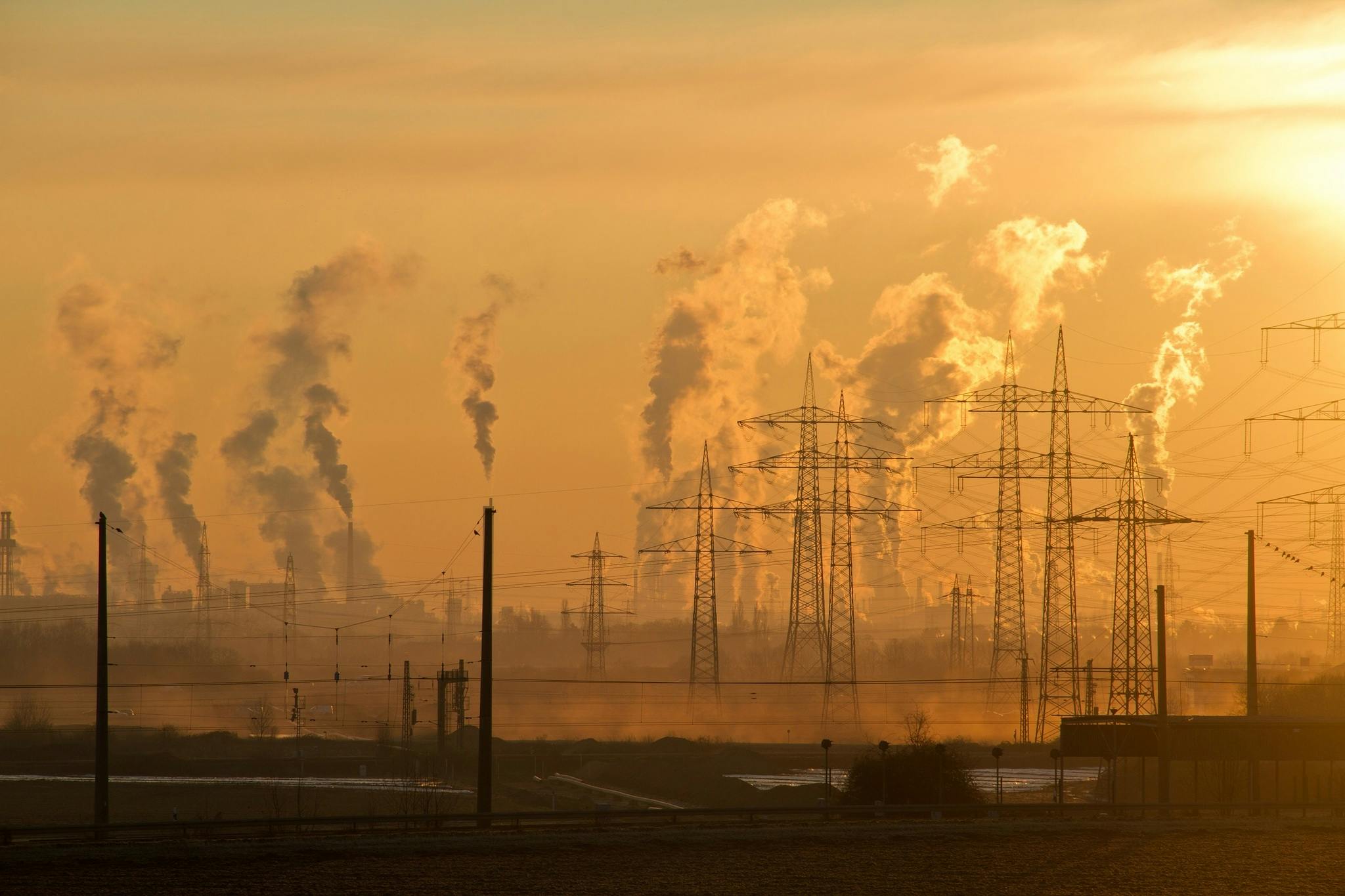
Air quality at production facilities directly affects personnel health, product quality and compliance with sanitary standards. In production facilities, concentrations of microorganisms, dust and harmful substances can far exceed permissible levels.
Ozonation is a comprehensive air treatment technology providing disinfection, deodorization and oxidation of volatile organic compounds. Industrial ozone generators with capacity from 10 to 1000 g/h enable treatment of spaces from 100 to 50,000 m³.
Mechanism of ozone action on air pollutants
Ozone is the strongest oxidizer capable of destroying a wide range of production air pollutants:
- Bacteria, viruses, fungi and spores — oxidative destruction of cell membranes
- Volatile organic compounds (VOCs) — oxidation to CO₂ and H₂O
- Hydrogen sulfide (H₂S) — oxidation to sulfates
- Ammonia (NH₃) — oxidation to nitrates and water
- Odorants — destruction of unsaturated bonds in molecules
| Microorganism | Ozone concentration, mg/m³ | Exposure time, min | Efficiency |
|---|---|---|---|
| E. coli | 0.5-1.0 | 15-20 | 99.9% |
| Staphylococcus aureus | 1.0-2.0 | 20-30 | 99.9% |
| Aspergillus niger (spores) | 2.0-5.0 | 30-60 | 99.0% |
| Influenza virus | 0.5-1.0 | 10-15 | 99.99% |
| SARS-CoV-2 | 1.0-2.0 | 15-20 | 99.9% |
Industrial ozonation application areas
The technology is in demand at facilities with high air quality requirements:
| Industry | Main tasks | Treatment mode |
|---|---|---|
| Food production | Disinfection, odor removal, extended shelf life | Daily, night shifts |
| Pharmaceuticals | Sterility of clean rooms classes A-D | After each shift |
| Packaging facilities | Disinfection of packaging materials and air | Continuous low-dose |
| Textile production | Odor removal, dust reduction | Periodic |
| Wood processing | Mold control, dust concentration reduction | Daily |
| Warehouse facilities | Mold prevention, disinfection | Scheduled 2-3 times/week |
Production facility treatment modes
Shock disinfection (10-50 mg/m³)
Used for deep treatment after repairs, mold contamination, sanitization after infection outbreaks. Conducted in the absence of personnel with 60-120 minute exposure.
Regular treatment (2-5 mg/m³)
Preventive ozonation during night shifts or technical breaks. Treatment time 30-60 minutes, ventilation 30-45 minutes.
Continuous low-dose ozonation (0.02-0.05 mg/m³)
Maintaining sanitary conditions in the presence of personnel. Concentration below MPC, constant circulation of ozonated air through ventilation system.
Local work zone treatment
Spot ozonation of areas with high microbial load. Application of mobile ozonators with directed supply.
| Facility volume, m³ | Ozone concentration, mg/m³ | Time to reach mode, min | Required capacity, g/h |
|---|---|---|---|
| 100-500 | 5 | 15-20 | 50-100 |
| 500-2000 | 5 | 20-30 | 100-300 |
| 2000-5000 | 5 | 30-45 | 300-500 |
| 5000-10000 | 5 | 45-60 | 500-800 |
| >10000 | 5 | 60-90 | 800-1500 |
Integration with ventilation systems
For large production facilities, optimal solution is integration of ozonators with existing ventilation system:
- Ozone injection into supply air duct — uniform distribution throughout facility
- Recirculation air treatment — microbial load reduction
- Exhaust air ozonation — odor removal before atmospheric discharge
- Local ventilation with ozonation — treatment of high contamination zones
| Scheme | Advantages | Limitations |
|---|---|---|
| Injection into supply | Uniformity, simplicity | Requires corrosion-resistant ducts |
| Recirculation | Energy savings, continuous treatment | Concentration limitation |
| Separate circuit | Mode flexibility, independence | Additional costs |
| Mobile units | Mobility, minimal investment | Uneven treatment |
Volatile organic compound neutralization
At facilities using solvents, paints, adhesives, VOC concentrations can exceed MPC by 5-20 times. Ozonation oxidizes organic compounds to safe products:
| Compound | MPC, mg/m³ | Oxidation rate | Reaction products |
|---|---|---|---|
| Formaldehyde | 0.5 | High | CO₂, H₂O, formic acid |
| Benzene | 5.0 | Medium | CO₂, H₂O, phenols |
| Toluene | 50 | Medium | CO₂, H₂O, benzaldehyde |
| Xylene | 50 | Medium | CO₂, H₂O, tolualdehyde |
| Acetone | 200 | Low | CO₂, H₂O, acetic acid |
| Styrene | 30 | High | CO₂, H₂O, benzaldehyde |
Compliance with regulatory requirements
Ozonation helps ensure production compliance with sanitary standards and occupational health requirements:
- SanPiN 1.2.3685-21 — Hygienic standards and safety requirements
- GOST 12.1.005-88 — General sanitary-hygienic requirements for work zone air
- GN 2.2.5.3532-18 — MPC of harmful substances in work zone air
- SP 2.2.3670-20 — Sanitary-epidemiological requirements for working conditions
- TR TS 021/2011 — Food product safety (for food production)
| Substance | Max MPC, mg/m³ | Shift avg MPC, mg/m³ | Hazard class |
|---|---|---|---|
| Ozone | 0.1 | 0.03 | 1 |
| Non-toxic dust | 10 | 4 | 4 |
| Ammonia | 20 | — | 4 |
| Hydrogen sulfide | 10 | — | 2 |
| Formaldehyde | 0.5 | 0.05 | 2 |
| Hydrocarbons (by C) | 300 | 100 | 4 |
Safety system for ozonation
Industrial ozonation systems are equipped with multi-level safety system:
- Ozone concentration sensors with emergency shutdown at >0.1 mg/m³
- Automatic generation stop when facility doors open
- Light and sound alarms during treatment
- Timer with automatic shutdown after treatment time
- Residual ozone destructor with 99.9% efficiency
- Personnel access lockout during high-concentration treatment
Implementation economic indicators
Industrial ozonation ROI
| Item | Ozonation | Alternatives |
|---|---|---|
| Capital costs | 300-800 thousand rub | 150-400 thousand rub |
| Annual operation | 50-120 thousand rub | 200-500 thousand rub |
| Consumables | None | Disinfectants, filters |
| Efficiency | 95-99.9% | 70-90% |
| Payback period | 12-18 months | — |
| Equipment service life | 10-15 years | 3-5 years |
| Indicator | Value | Comment |
|---|---|---|
| Equipment cost | 450,000 rub | 200 g/h ozonator + automation |
| Installation and commissioning | 80,000 rub | Integration with ventilation |
| Annual electricity | 18,000 rub | 2.5 kW × 2 h/day × 365 days × 10 rub/kWh |
| Savings on disinfectants | 180,000 rub/year | Elimination of chemical treatment |
| Reduced sick leave | 150,000 rub/year | 30% reduction in illness |
| Net effect | 312,000 rub/year | Payback in 18 months |
Industrial air ozonation advantages
Comprehensive impact
Simultaneous disinfection, deodorization and neutralization of harmful substances
Complete coverage
Treatment of entire facility volume, including hard-to-reach areas
No chemical residues
Ozone decomposes to oxygen without toxic products
Regulatory compliance
Ensuring SanPiN and occupational health requirements
Automation
Scheduled operation without personnel involvement
Minimal costs
No consumables, only electricity
Case: Food production, packaging facility
Ozonation system implementation at confectionery production enterprise:
| Indicator | Before implementation | After implementation | Change |
|---|---|---|---|
| Facility volume | 3,500 m³ | 3,500 m³ | — |
| Air microbial contamination | 2,500 CFU/m³ | 150 CFU/m³ | -94% |
| Mold complaint cases | 12 cases/month | 0-1 case/month | -95% |
| Product shelf life | 14 days | 21 days | +50% |
| Chemical disinfection costs | 35,000 rub/month | 5,000 rub/month | -86% |
| Personnel sick leave | 8 days/month | 3 days/month | -63% |