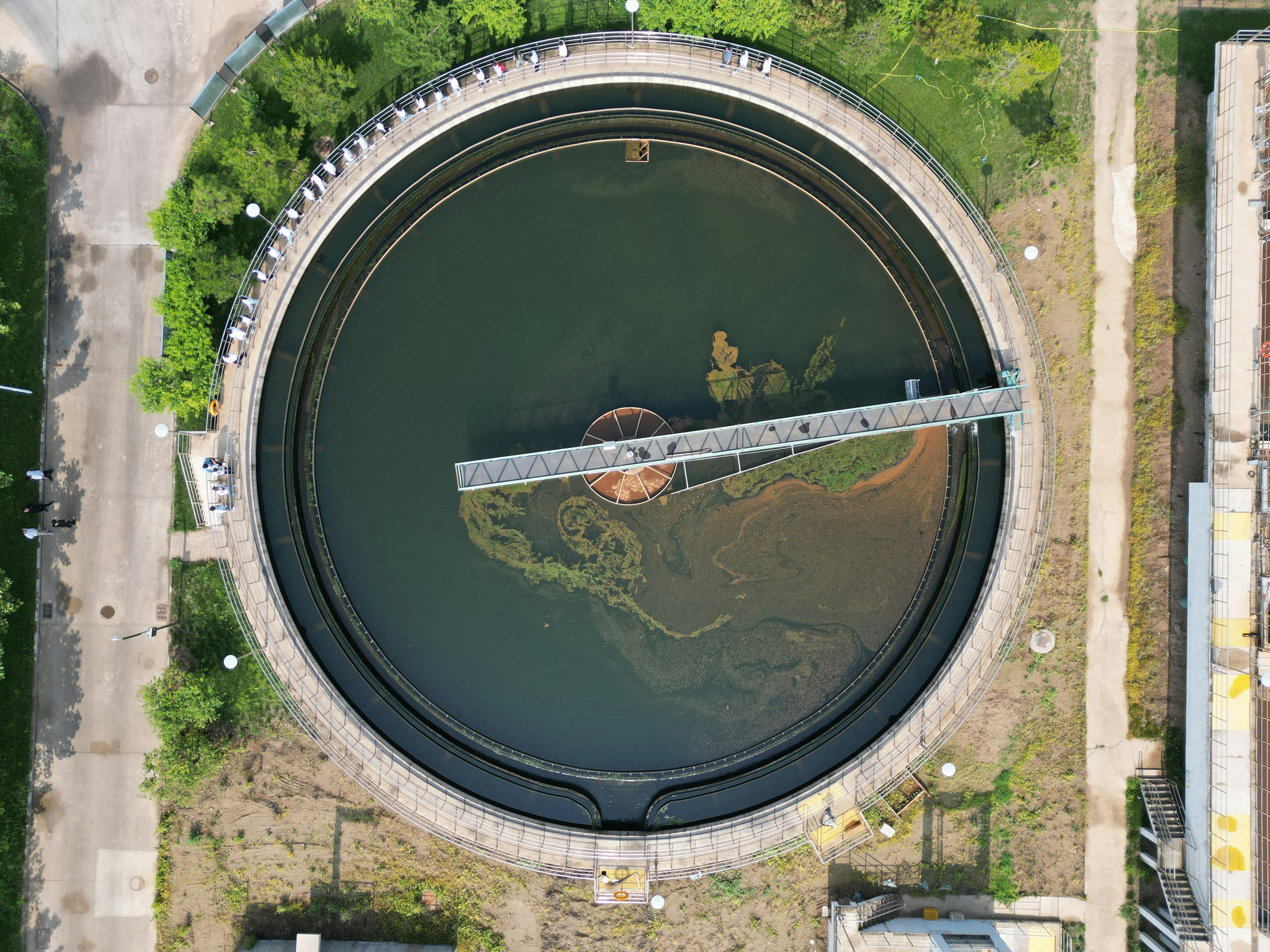
Wastewater from industrial facilities contaminated with oil products represents one of the most serious environmental problems. One liter of oil can pollute up to 1 million liters of water, creating a film that prevents gas exchange and threatens the death of aquatic ecosystems.
Ozonation is an advanced method for deep treatment of oil-containing wastewater, ensuring destruction of hydrocarbons to carbon dioxide and water. Unlike traditional methods (flotation, sorption, biological treatment), ozonation provides complete mineralization of pollutants without formation of secondary waste.
Mechanism of oil product oxidation by ozone
Ozone is a powerful oxidizer with an oxidation-reduction potential of 2.07 V (compared to 1.36 V for chlorine). When interacting with oil products, oxidative destruction reactions occur:
- Cleavage of long-chain hydrocarbons to short-chain
- Oxidation of aromatic compounds with opening of benzene ring
- Formation of intermediate products: aldehydes, ketones, carboxylic acids
- Complete mineralization to CO₂ and H₂O with sufficient ozone dose
- Destruction of polycyclic aromatic hydrocarbons (PAH)
| Compound class | Rate constant, M⁻¹·s⁻¹ | Half-life, min |
|---|---|---|
| Aliphatic hydrocarbons | 10² — 10³ | 15-30 |
| Aromatic (benzene, toluene) | 10³ — 10⁴ | 5-15 |
| Polyaromatic (PAH) | 10⁴ — 10⁵ | 1-5 |
| Naphthenic acids | 10³ — 10⁴ | 5-10 |
| Phenols | 10⁵ — 10⁶ | <1 |
Types of oil-containing wastewater and treatment features
Ozonation efficiency depends on the composition and concentration of oil products in wastewater:
| Wastewater source | Typical OP concentration, mg/L | Composition features | Treatment mode |
|---|---|---|---|
| Refineries, oil depots | 50-500 | Light fractions, benzene, toluene | Flotation + ozonation |
| Transport, gas stations | 10-100 | Oils, fuel, surfactants | Direct ozonation |
| Machine building | 20-200 | Coolants, emulsions, oils | De-emulsification + ozonation |
| Ship repair | 50-300 | Heavy fractions, resins | Multi-stage treatment |
| Metallurgy | 10-50 | Technical oils, soot | Flocculation + ozonation |
Technical specifications of industrial ozonators
High-capacity corona discharge ozone generators are used for treatment of oil-containing wastewater:
| Model | Capacity, g O₃/h | Wastewater volume, m³/h | Power consumption, kW |
|---|---|---|---|
| OZT-100 | 100 | 3-5 | 1.2 |
| OZT-500 | 500 | 15-25 | 5.5 |
| OZT-1000 | 1000 | 30-50 | 10 |
| OZT-2000 | 2000 | 60-100 | 18 |
| OZT-5000 | 5000 | 150-250 | 45 |
- Oxygen feed for maximum ozone concentration (up to 12% by mass)
- Cooling system for stable operation under high loads
- Automatic capacity regulation by sensor signal
- Residual ozone destructor with catalytic conversion
- Safety system with emergency shutdown on ozone leak
Environmental and economic indicators
Comparison of oil-containing wastewater treatment methods
| Parameter | Ozonation | Traditional methods |
|---|---|---|
| Treatment efficiency | 95-99% | 70-90% |
| Residual OP concentration | <0.05 mg/L | 0.5-5 mg/L |
| Sludge formation | None | 2-5% of volume |
| Reagent consumption | Oxygen only | Coagulants, sorbents |
| Operating costs | 15-25 rub/m³ | 30-60 rub/m³ |
| Capital costs | Medium | Low-medium |
| Footprint | Minimal | Significant |
Compliance with regulatory requirements
Ozonation ensures compliance with current regulations:
- SanPiN 2.1.5.980-00 — Hygienic requirements for surface water protection
- GOST 17.1.3.07-82 — Rules for water quality control of water bodies
- Ministry of Agriculture Order No. 552 — Water quality standards for fishery water bodies
- Federal Law No. 7-FZ "On Environmental Protection"
- Government Decree No. 644 — Rules for cold water supply and wastewater disposal
| Water body category | Limit, mg/L | Hazard class |
|---|---|---|
| Fishery water bodies, highest category | 0.05 | 3 |
| Fishery water bodies, category I | 0.05 | 3 |
| Fishery water bodies, category II | 0.05 | 3 |
| Domestic and drinking water use | 0.1 | 4 |
| Discharge to municipal sewerage | 4.0 | — |
Advantages of industrial ozonation
Environmental safety
Complete mineralization of oil products without secondary pollution and waste for disposal
Compliance with limits
Guaranteed achievement of standards for discharge into fishery water bodies
Process automation
Automatic regulation of ozone dose according to concentration sensor readings
Reduced fees
Savings on environmental fees and fines for exceeding limits
Versatility
Effective treatment of all classes of oil products: aliphatic, aromatic, PAH
Low operating costs
No consumables — only electricity and oxygen
Case study: Refinery with capacity of 6 million tons/year
Implementation of ozonation at wastewater treatment facilities of a refinery:
| Indicator | Before implementation | After implementation | Effect |
|---|---|---|---|
| Wastewater volume, m³/day | 5,000 | 5,000 | — |
| OP concentration at inlet, mg/L | 25-40 | 25-40 | — |
| OP concentration at outlet, mg/L | 0.8-1.5 | 0.03-0.05 | -96% |
| Environmental fees, million rub/year | 18.5 | 0.2 | -99% |
| Coagulant consumption, t/year | 120 | 0 | -100% |
| Sludge formation, t/year | 850 | 0 | -100% |
| Payback period | — | 14 months | — |