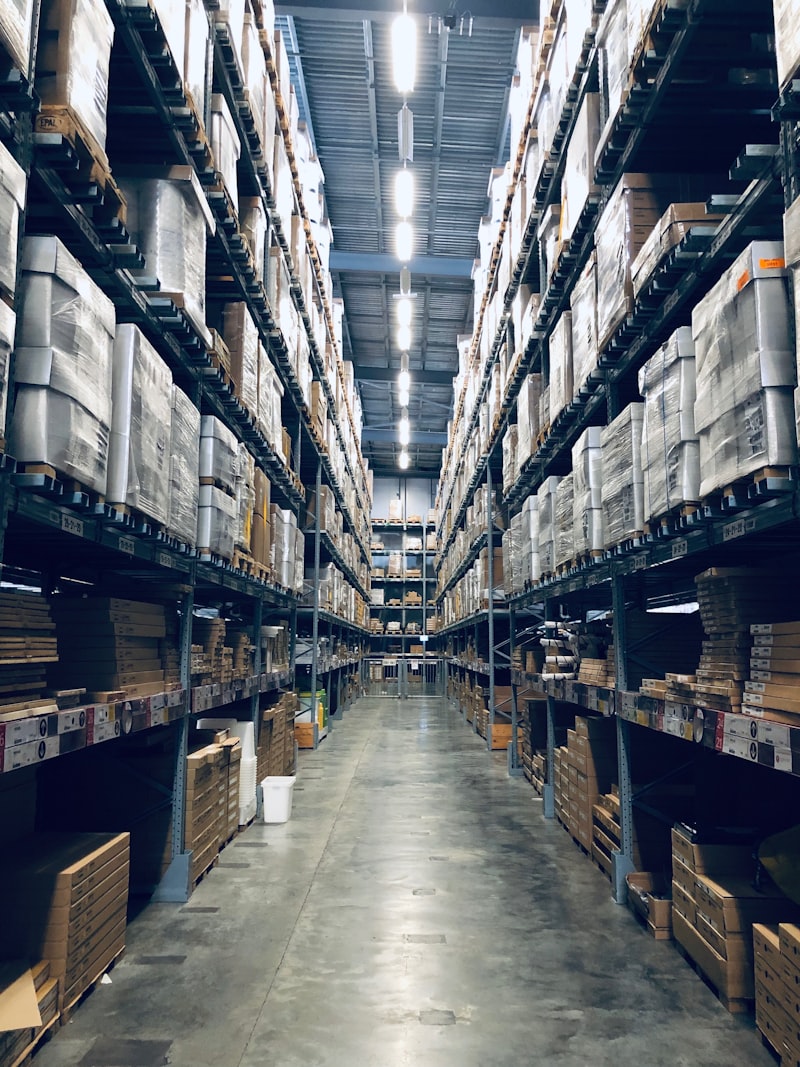
Modern warehouse logistics requires a comprehensive approach to maintaining stored goods quality. Air ozonation is a universal technology that simultaneously addresses disinfection, deodorization, pest control and spoilage prevention.
For logistics operators and warehouse facility owners, ozonation becomes a quality standard that reduces losses, extends product shelf life and ensures compliance with sanitary requirements without constant use of chemical agents.
Warehouse types and recommended solutions
Ozonation approach varies depending on warehouse facility type, stored products and turnover intensity.
| Warehouse type | Recommended equipment | Operating mode |
|---|---|---|
| Distribution center | Duct ozone generators in HVAC | Continuous low-dose |
| Class A (high-rise storage) | Mobile + wall-mounted | Night zonal treatment |
| Class B (standard) | Wall-mounted ozone generators | 2–3 times per week |
| Cold storage | Special models -20°C | Scheduled without defrosting |
| E-commerce warehouse | Ozone cabinets for batches | Treatment on receipt |
Coverage calculation for large spaces
For effective treatment of warehouses from 1000 m², it is necessary to consider not only room volume, but also ceiling height, presence of racks, air exchange intensity and type of stored goods.
| Parameter | Value | Note |
|---|---|---|
| Base ratio | 1 g/h per 25 m³ | For empty room |
| Occupancy coefficient | ×1.2–1.5 | With racks present |
| Ceiling height >6m | ×1.3 | Additional coefficient |
| High humidity >70% | ×1.2 | Ozone decays faster |
| Temperature below 0°C | ×0.8 | Ozone more stable |
Integration with ventilation system (HVAC)
For large logistics complexes, optimal solution is integration of ozone equipment into existing ventilation and air conditioning system.
- 1Duct ozone generator installed in supply or recirculation duct
- 2Ozone concentration sensor monitors level in work zone
- 3Automation controls modes: preventive (low doses) and intensive (off-hours)
- 4Integration with BMS (Building Management System) for centralized control
- 5Ozone destructor at ventilation outlet when discharging to atmosphere
- Even ozone distribution throughout warehouse volume
- Automatic ventilation through ventilation system
- Zoning treatment capability
- Minimal maintenance costs after integration
- Compliance with occupational safety requirements
Treatment frequency and optimal schedule
Ozonation regularity depends on warehouse type, turnover intensity and storage quality requirements. For most warehouses, 2–4 treatments per week during off-hours is sufficient.
| Product type | Frequency | Duration |
|---|---|---|
| Industrial goods | 1–2 times per week | 60–90 minutes |
| Textiles, clothing | 2–3 times per week | 60–120 minutes |
| Household chemicals | 1 time per week | 30–60 minutes |
| Electronics | 1–2 times per week | 30–60 minutes |
| Construction materials | 1 time per week | 60–90 minutes |
| Perishable goods | Daily | 120–180 minutes |
Pest prevention
Ozone is effective against a wide range of warehouse pests: insects, rodents, mites. Regular treatment creates unfavorable environment for their habitation and reproduction.
| Pest | Effectiveness | Treatment mode |
|---|---|---|
| Grain weevil | 95–99% | 30–60 mg/m³, 30–60 min |
| Flour beetle | 90–95% | 20–40 mg/m³, 60 min |
| Tobacco beetle | 95–99% | 30–50 mg/m³, 45 min |
| Dust mites | 99% | 10–20 mg/m³, 30 min |
| Rodents (repellent) | 80–90% | 5–10 mg/m³, regularly |
When pests are detected, ozonation is used as part of disinfestation measures. Ozone does not replace professional treatment for severe infestation, but is effective for prevention and maintenance treatments.
Air quality for staff
Ozonation improves working conditions for warehouse workers: eliminates musty odors, reduces dust and allergen concentration, destroys pathogenic microorganisms in air.
Before and after ozonation implementation
| Indicator | With ozonation | Without ozonation |
|---|---|---|
| Indoor odor | Fresh air | Mustiness, product odors |
| Air microflora | Reduced by 80–90% | Standard level |
| Respiratory diseases | -30–40% | Base level |
| Allergic reactions | -50–60% | Frequent complaints |
| Subjective comfort | High | Medium/low |
Compliance with storage requirements
Ozonation helps comply with sanitary requirements for warehouse facilities of various classes. Ozone leaves no chemical residues on goods and is compatible with most materials.
- SanPiN 2.1.2.2645-10 — sanitary and epidemiological requirements
- SP 2.2.3670-20 — sanitary rules for workplaces
- GOST R 51303-2013 — warehouse facility classification
- Tenant requirements for storage quality
- Certification requirements for pharmaceutical and food warehouses
Implementation economics
Investment in ozonation pays off through reduced losses, savings on chemical treatment and improved staff health indicators.
| Item | Without ozonation | With ozonation |
|---|---|---|
| Product spoilage losses | 500,000 ₽/year | 150,000 ₽/year |
| Chemical treatment | 120,000 ₽/year | 20,000 ₽/year |
| Sick leave (days) | 45 days/year | 25 days/year |
| Quality complaints | 80,000 ₽/year | 20,000 ₽/year |
| Ozonation costs | — | 180,000 ₽/year* |
* Including equipment depreciation, electricity and maintenance. Net savings: about 330,000 ₽/year. Equipment payback period: 8–14 months.
Benefits for logistics operators
Universality
One method against bacteria, viruses, fungi, odors and pests
Scalability
From small warehouse to logistics complex 100,000+ m²
Automation
Scheduled operation without staff, BMS integration
No residues
Ozone decays to oxygen, leaving no chemical traces on goods
Quick deployment
Equipment installation and startup in 1–2 days without warehouse shutdown
Low OPEX
Minimal operating costs: only electricity and air