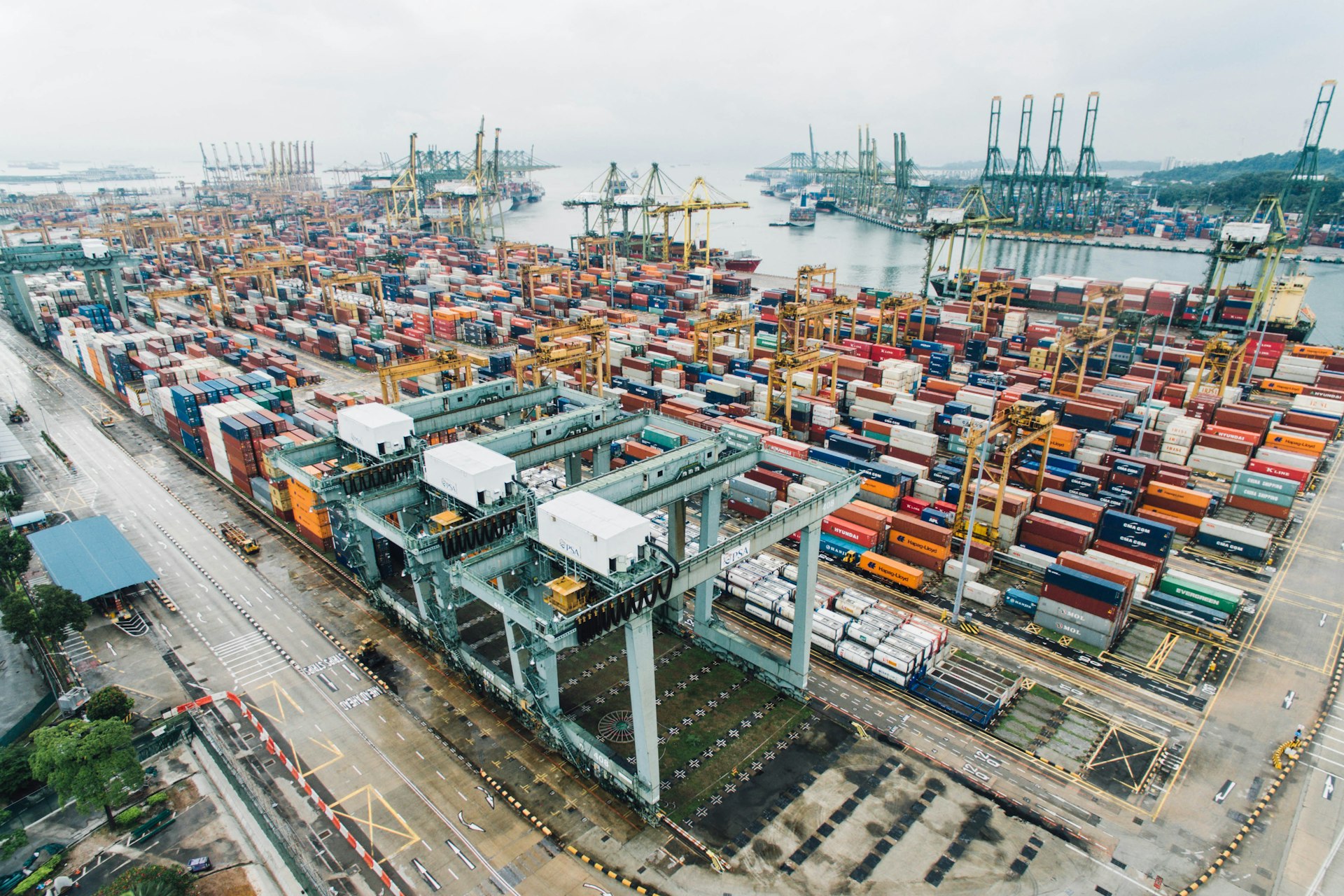
Shipping containers are the foundation of international trade. Millions of TEU (twenty-foot equivalents) are transported by sea annually with goods of all categories. Containers often require quarantine treatment: to destroy pest insects, mold, bacteria or remove odors from previous cargo.
Traditional fumigation with methyl bromide or phosphine leaves toxic residues, requires special permits and long degassing. Ozonation is an eco-friendly alternative: ozone decays to pure oxygen without contaminating cargo or the environment.
Problems solved by ozonation
Shipping containers face a number of problems related to long transport and storage:
- Pest insects — quarantine species imported with cargo from other countries
- Mold and fungi — develop with temperature fluctuations and high humidity
- Bacterial contamination — especially relevant for food cargo
- Odors — from previous cargo (fish, chemicals, fertilizers) or mold
- Quarantine requirements — mandatory treatment before import into the country
Ozone vs traditional fumigation
Comparison of container treatment methods
| Parameter | Ozonation | Methyl bromide | Phosphine |
|---|---|---|---|
| Toxic residues | No | Yes (carcinogen) | Yes (highly toxic) |
| Treatment time | 12-24 hours | 24-48 hours | 72-120 hours |
| Degassing | 2-4 hours | 24-48 hours | 48-72 hours |
| Impact on ozone layer | No | Yes (banned in EU) | No |
| Food cargo | Yes | Limited | No |
| Electronics | Yes (with caution) | Yes | Yes |
| Special permits | No | Yes | Yes |
Container ozonation technology
Container inspection
Check door seal tightness, ventilation openings. If necessary — temporary sealing with tape or film.
Parameter calculation
Determine container volume, target pest type, required ozone concentration. Standard 20-foot container — about 33 m³.
Equipment connection
Install ozonator with gas supply inside container through technical opening or door gap. Seal the entry.
Ozonation
Supply ozone until target concentration is reached (50-100 mg/m³ for insects). Maintain concentration for 12-24 hours.
Degassing
Turn off ozonator, open container doors. Natural or forced ventilation for 2-4 hours.
Container treatment modes
| Treatment goal | Concentration | Exposure time | Notes |
|---|---|---|---|
| Insects (adults) | 30-50 mg/m³ | 12-18 hours | Most species |
| Insects (all stages) | 50-100 mg/m³ | 18-24 hours | Including eggs and larvae |
| Mold and fungi | 20-30 mg/m³ | 8-12 hours | From surfaces |
| Bacteria | 15-25 mg/m³ | 4-8 hours | 99.9% inactivation |
| Odor removal | 10-20 mg/m³ | 4-6 hours | Odorant neutralization |
| Complex treatment | 50-80 mg/m³ | 24 hours | All factors |
For quarantine pests (bark beetles, weevils, flour beetles) maximum mode is recommended: 80-100 mg/m³ for 24 hours. This guarantees destruction of insects at all development stages, including eggs inside wood or grain.
Efficiency against pests
| Pest | Adults | Larvae | Eggs |
|---|---|---|---|
| Bread beetle | 100% | 100% | 100% |
| Grain weevil | 100% | 100% | 99.9% |
| Flour beetle | 100% | 100% | 100% |
| Rice weevil | 100% | 100% | 99.9% |
| Tobacco beetle | 100% | 100% | 100% |
| Wood beetle | 100% | 99.9% | 99.5% |
| Clothes moth | 100% | 100% | 100% |
Container types and treatment specifics
Dry containers (DC)
Standard treatment. 20-foot — 33 m³, 40-foot — 67 m³. Require sealing of ventilation openings.
Refrigerated (RF)
Treatment with refrigeration unit off. Good tightness. Caution with electronics.
Ventilated
Require temporary sealing of all ventilation openings. Higher ozone consumption.
Open-top
Treatment after covering with tarp. Perimeter sealing. Partial leakage possible.
| Container type | Volume | Ozonator capacity | Concentration build-up time |
|---|---|---|---|
| 10 feet | 16 m³ | 20-30 g/h | 1-2 hours |
| 20 feet | 33 m³ | 30-50 g/h | 2-3 hours |
| 40 feet | 67 m³ | 50-80 g/h | 3-4 hours |
| 40 feet HC | 76 m³ | 60-100 g/h | 3-5 hours |
| 45 feet | 86 m³ | 80-120 g/h | 4-5 hours |
Application for various cargo
Ozonation is suitable for most cargo categories:
- Grains and legumes — destruction of storage pests without chemical residues
- Nuts and dried fruits — preservation of appearance and taste
- Coffee and cocoa — mold neutralization without affecting aroma
- Spices — quarantine treatment before import
- Textiles — removal of warehouse storage odors, mold
- Wood and lumber — destruction of bark beetles and wood borers
- Paper and cardboard — prevention of fungal damage
Ozone fumigation economics
Cost of treating a 40-foot container
| Cost item | Ozonation | Chemical fumigation |
|---|---|---|
| Equipment (one-time) | 150-300 thousand ₽ | Not required (service) |
| Treatment cost | 500-1000 ₽ | 15-25 thousand ₽ |
| Downtime | 24-28 hours | 72-120 hours |
| Documentation | Treatment certificate | Fumigation certificate |
| Staff | 1 person (training) | Licensed team |
With regular container treatment, ozonator equipment payback is 10-20 treatments. For terminals and logistics companies with high container turnover, savings amount to hundreds of thousands of rubles per month.
Equipment for containers
High-capacity industrial ozonators are used for container fumigation:
- Ozone generators 50-200 g/h — for 20-40 foot containers
- Supply systems — hoses, fittings, sealing gaskets
- Ozone analyzers — real-time concentration monitoring
- Timers and controllers — process automation
- Mobile complexes — on trailer or van base
Regulatory aspects
Ozonation as a quarantine treatment method is recognized in many countries:
- ISPM-15 — allows alternative methods for wood packaging treatment
- EPA (USA) — ozone registered as antimicrobial agent
- EU — ozonation approved for organic products
- Rosselkhoznadzor — accepts ozonation certificates for quarantine control
- SanPiN — ozone approved for food product disinfection
When exporting/importing, check destination country requirements. In most cases, ozonation is accepted as an alternative to chemical fumigation with proper documentation: treatment certificate indicating concentration and exposure time.
Safety requirements
- Treatment only on open areas or ventilated hangars
- Fence treatment area, post warning signs
- Personnel — at least 10 m from operating ozonator
- When entering container before degassing — respirator with carbon filter
- Concentration monitoring with analyzer before allowing people
- Emergency shutdown — upon detection of leak or malfunction